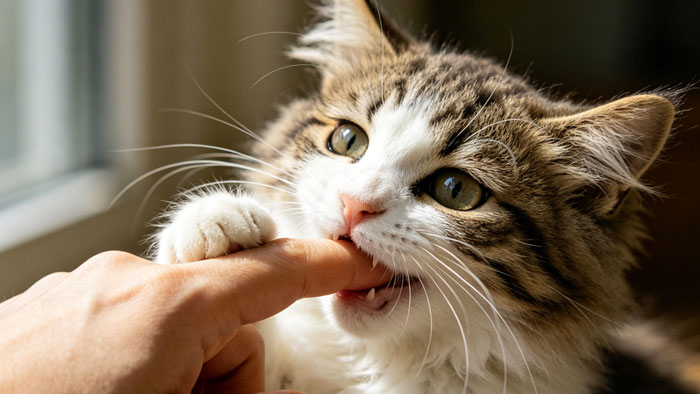
Does your cat treat your hands like a personal chew toy? You’re not alone. Cat biting is one of the top behavioral complaints among new cat owners — and it can escalate fast if left unaddressed. The good news? With the right approach, you can redirect this natural instinct without punishing your cat or sacrificing your bond.
In this guide, you’ll learn exactly why cats bite, how to read the warning signs before it happens, and — most importantly — 8 proven tips to stop cat biting for good.
Key Takeaways
- Cats are hardwired predators; biting is instinct, not aggression.
- Play deprivation is the #1 cause of biting in indoor cats.
- Never use punishment — redirection always works better.
- A consistent hunt–catch–eat–sleep routine dramatically reduces biting.
- Kittens raised with a companion learn bite inhibition faster.
Why Do Cats Bite? Understanding the Root Cause
Before you can fix the problem, you need to understand it. Cats — even pampered indoor ones — are apex predators at heart. They share the same hardwired hunting drive as lions and tigers. Stalking, pouncing, and biting aren’t bad behavior; they’re biological necessities.
When a cat’s hunting needs go unmet, that energy has to go somewhere. And more often than not, it goes straight to your ankles.
Common triggers for cat biting include:
- Lack of daily interactive play
- Overstimulation during petting (a.k.a. “petting-induced aggression”)
- Fear or pain responses
- Play behavior that was accidentally reinforced with hands and fingers
Understanding the why behind the bite puts you in control of the solution.
8 Tips to Stop Your Cat From Biting You
1. Make Cat Toys Move — Every Single Day
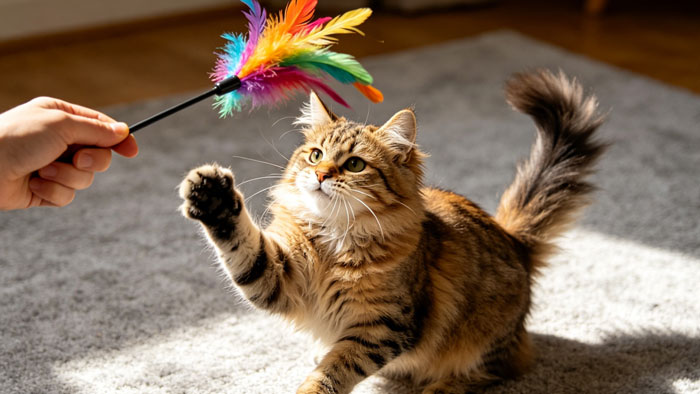
This is the single most impactful thing you can do. A moving target triggers your cat’s prey drive in a safe, productive way. Static toys thrown on the floor rarely cut it — your cat needs you to animate the hunt.
Aim for two to three active play sessions per day, each lasting 10–15 minutes. Use wand teasers, feather toys, or laser pointers to mimic the erratic movement of real prey.
Pro Tip: Vary the movement patterns. Drag the toy slowly like a stalking mouse, then make it dart unpredictably. Mimicking real prey behavior keeps cats mentally engaged and physically satisfied.
2. Never Use Your Hands as Toys
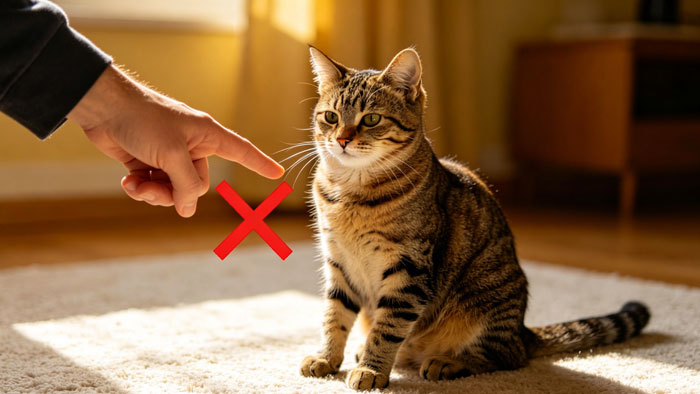
It’s tempting. Wiggling your fingers at a kitten is adorable — right up until the kitten grows into a 12-pound cat with a full set of adult teeth. Every time you use your hands to play, you’re teaching your cat that hands = prey.
Break this habit immediately. If a kitten bites your hand during play, go completely limp and still — prey that doesn’t move is boring prey. Then redirect to a toy.
Pro Tip: If you have kids in the house, make sure they follow this rule too. Children are often the biggest culprits of hand-play, which accidentally trains cats to bite harder.
3. Redirect Biting to an Appropriate Target
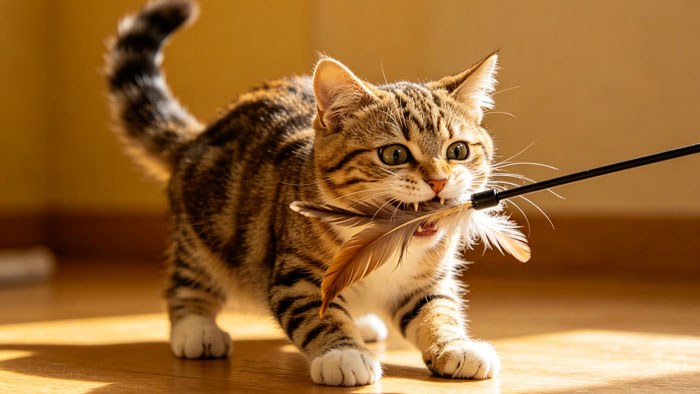
When your cat bites you, resist the urge to pull away sharply — sudden movement triggers the prey response and makes things worse. Instead:
- Go limp immediately.
- Calmly withdraw your hand.
- Offer a toy as a substitute target.
Think of it this way: you’re not saying “no biting” — you’re saying “bite this instead.” The redirect must always be more exciting than the original target.
4. Learn to Read Pre-Bite Body Language
Most cats don’t bite without warning. Learning to spot the signals early lets you intervene before teeth meet skin.
Watch for:
- Tail lashing or thumping
- Ears rotating flat or sideways
- Skin rippling along the back
- Dilated pupils
- Sudden stillness and focused staring
When you see these signs during a petting session, stop immediately. Overstimulation is a leading cause of biting in adult cats, and respecting these signals builds trust over time.
Pro Tip: Every cat has a unique “petting threshold.” Some tolerate minutes of stroking; others tap out after 30 seconds. Track where your cat usually bites and start stopping the session before that point.
5. Don’t Be a Tease — Let Them Win

Dangling a toy just out of reach sounds like fun — but for your cat, it’s deeply frustrating. If the prey never gets caught, the hunt never feels complete, and that pent-up energy has to go somewhere (usually your leg).
Give your cat a realistic challenge, then let them catch the toy. Let them bunny-kick it, bite it, and “kill” it. This satisfying end to the hunt cycle is critical for psychological wellbeing.
Follow up with a kicker toy or stuffed plush so your cat can fully work out those prey instincts after the wand session ends.
6. Build a Hunter’s Rhythm Into Their Day
Cats thrive on routine, and their natural behavioral cycle looks like this:
Hunt → Catch → Kill → Eat → Groom → Sleep
You can replicate this indoors by always feeding your cat after a play session. The sequence trains their brain to associate the end of the hunt with a meal — just like in the wild. After eating, most cats will groom themselves and settle in for a nap, making the home calmer for everyone.
This rhythm is especially helpful for cats that bite in the early morning hours when their predatory energy peaks.
Pro Tip: Use a puzzle feeder or slow-feeder bowl at mealtime to extend the “hunting” experience and give your cat extra mental stimulation.
7. Consider Getting a Second Cat
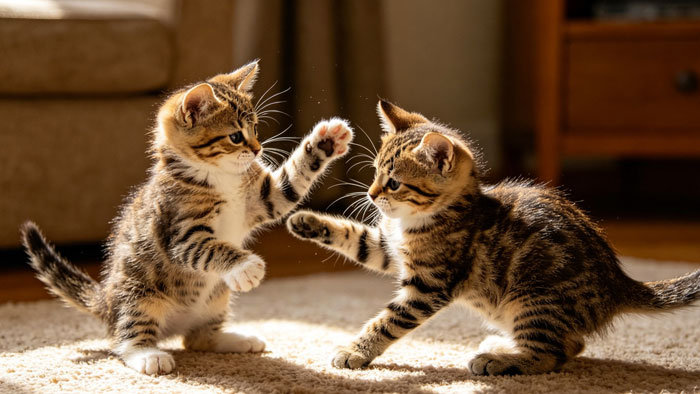
There’s an old saying among cat behaviorists: one kitten is half a kitten. A feline companion gives your cat a socially appropriate outlet for all that biting and wrestling energy. Kittens raised together also teach each other bite inhibition — when one bites too hard, the other yelps and ends the play session, providing instant, natural feedback that no human can replicate.
If adding a second cat isn’t feasible, rotate toys frequently and invest in self-play options like motorized toys or puzzle feeders to fill the social gap.
8. Rule Out Pain or Medical Causes
If your cat’s biting is sudden, escalating, or out of character, it’s worth a vet visit. Pain-related biting is common and often overlooked — conditions like dental disease, arthritis, or skin sensitivity can make even gentle touch feel threatening.
A sudden behavior change is always a reason to consult your veterinarian before assuming it’s a training issue.
FAQ: Stopping Cat Biting
Q: Is it normal for cats to bite their owners?
Yes — especially kittens. Biting is a natural part of play and hunting behavior. The goal isn’t to eliminate the instinct, but to redirect it appropriately.
Q: My cat bites me when I stop petting them — why?
This is called petting-induced aggression. Your cat is communicating that they’ve hit their stimulation limit. Watch for body language cues and end sessions before they reach that threshold.
Q: At what age should kittens stop biting?
With consistent training and play, most kittens significantly reduce biting behavior by 6–12 months as they mature. Starting redirection early produces the best results.
Q: Can adult cats be trained not to bite?
Absolutely. Adult cats take longer to adjust than kittens, but with patience and consistent redirection, the behavior improves significantly.
Q: What’s the best toy to stop a cat from biting hands?
Interactive wand teasers are the gold standard. They keep your hands safely distanced while satisfying your cat’s hunting drive. Rotate toy types regularly to maintain interest.
The Bottom Line
Biting isn’t a character flaw — it’s a communication and enrichment problem. Cats that bite are often under-stimulated, under-played-with, or accidentally trained to treat hands as toys. By building structured play sessions into your daily routine, learning your cat’s body language, and consistently redirecting biting to appropriate targets, you’ll see a dramatic shift in behavior.
Your cat isn’t trying to hurt you. They’re just a tiny apex predator who needs a little guidance on where to aim those instincts.

