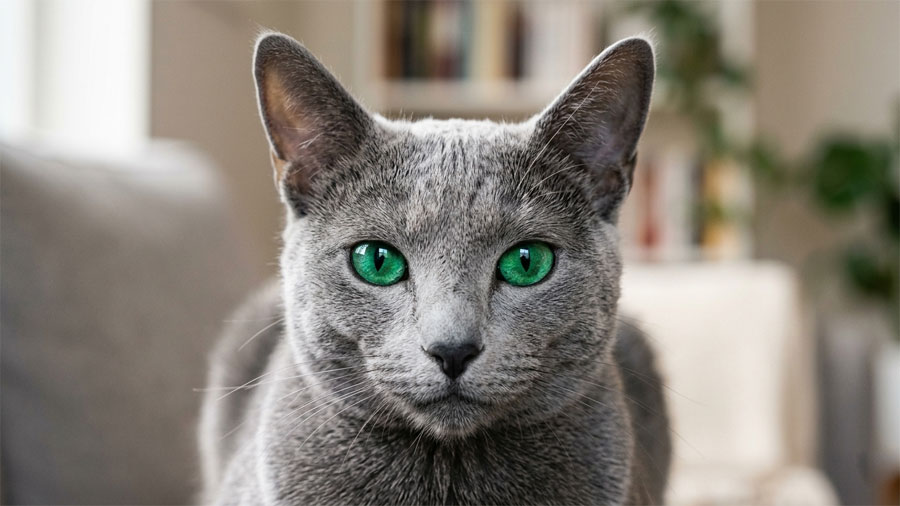
Most people fall for the Russian Blue domestic cat the moment they see it. That silver-blue coat. Those emerald eyes. But here’s what actually keeps owners loyal for 15+ years: this cat’s personality. This guide covers everything you need — temperament, care, hypoallergenic facts, health risks, real costs, and how to tell if your cat is even a Russian Blue. No fluff. Just what you need to make a confident decision.
What Exactly Is a Russian Blue Cat? (Quick Breed Snapshot)
The Russian Blue is a naturally occurring domestic cat breed — not the product of selective crossbreeding programs. It originated in northern Russia and remains one of the most recognizable breeds in North America today.
Before we go deeper, here’s your at-a-glance reference:
| Feature | Details |
|---|---|
| Size | Medium (7–12 lbs) |
| Coat | Short, dense, blue-gray with silver-tipped guard hairs |
| Eye Color | Vivid emerald green (adults) |
| Lifespan | 15–20 years |
| Hypoallergenic | Somewhat — low Fel d1 production |
| Apartment-Friendly | Yes |
| Good for First-Time Owners | Yes |
| Energy Level | Medium |
One common point of confusion: Russian Blues are often mistaken for British Shorthairs, Chartreux, and Korats. We break down the differences in a dedicated section below.
A Brief (and Surprisingly Fascinating) History
The Russian Blue’s origins trace back to Arkhangelsk — a port city on Russia’s White Sea, roughly 150 miles south of the Arctic Circle. Sailors most likely brought these cats to Northern Europe and Great Britain in the 1860s.
The breed made its public debut at London’s Crystal Palace in 1875, where it was shown under the name “Archangel Cat.” Russian czars reportedly kept them as palace companions — a detail that explains the breed’s dignified bearing.
After World War II, Russian Blue populations collapsed across Europe. Breeders in Scandinavia and England rebuilt the gene pool, and American breeders later merged both bloodlines into the modern standard recognized today by the Cat Fanciers’ Association official Russian Blue breed standard.
The breed also contributed DNA to the Nebelung (essentially a long-haired Russian Blue), the Havana Brown, and some Oriental Shorthairs.
Russian Blue Cat Personality: What Living With One Actually Looks Like
Target LSI: Russian Blue cat personality and temperament
The Classic Temperament: Loyal, But On Their Own Terms
Russian Blues are not lap cats in the traditional sense. They won’t demand to be held. But they will follow you from room to room, wait outside the bathroom door, and position themselves exactly three feet away while you work — close enough to observe, far enough to maintain dignity.
Key traits to know:
- Loyal to their people, reserved with strangers. Expect your Russian Blue to disappear when guests arrive. This isn’t anxiety — it’s preference.
- Quiet communicators. They rarely vocalize, but use sustained eye contact and slow blinks to express trust.
- Routine-dependent. These cats thrive on predictability. Rearranged furniture or a new schedule can genuinely stress them out.
- Highly intelligent. Many Russian Blues learn to open lever-style door handles. Childproof latches are not an overreaction.
Separation Anxiety: What Solo Owners Need to Know
This is the topic competitor articles consistently skip — and it matters.
Russian Blues bond deeply. An adult cat left alone for 9+ hours daily will often show subtle signs of distress: over-grooming, reduced appetite, or increased clinginess when you return. These are early behavioral red flags, not personality quirks.
Three approaches that genuinely help:
- Puzzle feeders — extend mealtime mentally, reduce boredom-driven behavior
- A feline companion — Russian Blues generally accept a second calm cat after a proper introduction
- Interactive cameras — products like Furbo allow you to speak to your cat mid-day, which behavioral research suggests can reduce cortisol in cats with separation-related stress
feline separation anxiety behavioral indicators
Is a Russian Blue Right for Your Lifestyle?
| Your Situation | Compatibility | What to Know |
|---|---|---|
| Single professional (office job) | ⭐⭐⭐ | Add enrichment toys; consider a second cat |
| Work-from-home | ⭐⭐⭐⭐⭐ | Near-ideal setup |
| Family with kids under 7 | ⭐⭐ | Needs a guaranteed quiet retreat space |
| Multi-cat household | ⭐⭐⭐⭐ | Slow introduction essential |
| Apartment living | ⭐⭐⭐⭐⭐ | Perfectly suited |
| Frequent travelers | ⭐⭐ | Needs a consistent, trusted caretaker |
Russian Blue Cat Care Guide: Daily, Weekly & Monthly
Target LSI: Russian Blue cat care guide
Feeding: How Much, How Often, and What to Avoid
Russian Blues have a documented tendency toward obesity. They are enthusiastic eaters who will not self-regulate. Free-feeding (leaving food out all day) is a mistake with this breed.
Practical feeding framework:
- Kittens (under 1 year): 3–4 small meals per day; follow packaging for age-appropriate portions
- Adults (1–7 years): 2 meals per day; target approximately 20 calories per pound of ideal body weight
- Seniors (7+ years): Consult your vet — caloric needs typically decrease while protein requirements stay high
Prioritize foods with named animal protein (chicken, salmon, turkey) as the first ingredient. Avoid formulas where corn, rice, or potato appear in the top three ingredients. High-carbohydrate diets directly correlate with feline obesity and Type 2 diabetes.
best high-protein cat food for indoor cats
Grooming: Less Work Than You Think
The Russian Blue’s double coat looks high-maintenance. It isn’t. The dense undercoat actually traps loose hair before it reaches your furniture.
Your realistic grooming schedule:
- Weekly: Brush with a rubber grooming glove or soft slicker brush — 5 minutes is enough
- Every 2 weeks: Trim nails; check ears for wax buildup
- Monthly: Dental care check; wipe outer ear with pet-safe cleaner if needed
- As needed: Wipe coat with a damp microfiber cloth — especially helpful for allergy-sensitive households
Bathing is rarely necessary. If you do bathe your Russian Blue, keep it infrequent (every 4–6 weeks maximum) and use lukewarm water with a fragrance-free cat shampoo.
Exercise and Mental Stimulation
Russian Blues are moderately active. They play hard for short bursts, then return to dignified observation mode.
What works well:
- Wand toys (feather or ribbon) — 2 sessions of 10–15 minutes per day
- Multi-level cat trees with enclosed hideaways — essential for this privacy-loving breed
- Puzzle feeders and treat balls — channel their intelligence productively
What doesn’t work: leash training. Russian Blues find outdoor exposure stressful rather than enriching. Don’t push it.
Are Russian Blue Cats Hypoallergenic? The Honest Answer
Target LSI: Russian Blue cat hypoallergenic
The Science Behind Fel d1
No cat is truly hypoallergenic. The correct framing: Russian Blues produce less of the primary cat allergen, Fel d1 — a glycoprotein secreted through the skin’s sebaceous glands and present in saliva.
When cats groom themselves, Fel d1-coated saliva dries on the fur and becomes airborne dander. Studies published in peer-reviewed allergy journals confirm that Russian Blues produce measurably lower Fel d1 concentrations compared to breeds like the British Shorthair or Maine Coon. However, individual variation is real — one Russian Blue may trigger reactions while another doesn’t.
Bottom line: If you have cat allergies, spend 1–2 hours with the specific cat before committing to adoption. Don’t rely on breed reputation alone.
Practical Allergy Management at Home
If you do bring home a Russian Blue and have mild-to-moderate allergies, these strategies make a real difference:
- Run a HEPA air purifier (look for CADR rating above 200) in your bedroom and main living area
- Keep the bedroom a cat-free zone — 8 hours of allergen-free air makes a significant difference
- Wipe your cat weekly with unscented, pet-safe grooming wipes to reduce surface allergen load
- Wash your hands immediately after play sessions; avoid touching your face
- Vacuum with a HEPA-filter vacuum twice weekly
Russian Blue vs. Other Low-Allergen Breeds
| Breed | Fel d1 Level | Shedding | Coat |
|---|---|---|---|
| Russian Blue | Low | Low | Short, dense |
| Siberian | Low | High | Long |
| Balinese | Low | Medium | Long |
| Bengal | Medium-Low | Low | Short |
| Sphynx | Medium | None | Hairless |
Russian Blue Cat Health and Lifespan
Target LSI: Russian Blue cat lifespan and health problems
How Long Do Russian Blues Live?
The honest answer: 15–20 years is a realistic range for well-cared-for indoor cats. The lower figures (10–14 years) cited in some sources typically reflect outdoor cats or cats with unmanaged weight issues.
Russian Blues have no known breed-specific hereditary disorders — a genuine advantage over many purpose-bred cats. Their longevity is less about genetics and more about husbandry: diet, weight management, and consistent veterinary care.
Health Issues to Watch For
| Condition | Signs to Watch | Prevention |
|---|---|---|
| Obesity | Difficulty feeling ribs, reduced activity | Portion control, twice-daily feeding |
| Periodontal disease | Bad breath, drooling, pawing at mouth | Daily or weekly brushing |
| Chronic kidney disease | Increased thirst/urination, weight loss | Annual bloodwork after age 7 |
| Hypertrophic cardiomyopathy | Labored breathing, lethargy | Echocardiogram screen at age 5+ |
| Hyperthyroidism | Increased appetite with weight loss | Thyroid panel in senior exams |
Preventive Care Schedule by Age
| Age | Vet Frequency | Key Screenings |
|---|---|---|
| Kitten (0–1 yr) | 3–4 visits | Core vaccines, spay/neuter, parasite screening |
| Adult (1–7 yr) | 1–2 visits/year | Dental check, weight, routine bloodwork |
| Senior (7+ yr) | 2 visits/year | Kidney panel, thyroid, cardiac screening |
How Much Does a Russian Blue Cat Actually Cost?
Target LSI: how much does a Russian Blue cat cost
Competitor articles quote ranges from $500 to $3,000 with no explanation. Here’s what those numbers actually mean:
| Source | Price Range | Reality Check |
|---|---|---|
| Shelter / rescue | $50–$200 | Rare but worth checking; may be mixed breed |
| Backyard/unverified breeder | $300–$700 | No health guarantees; avoid |
| Reputable registered breeder | $900–$2,000 | Health-tested parents, pedigree documentation |
| Show-quality / championship line | $2,000–$3,500+ | Competition lineage; unnecessary for pet owners |
Price varies by geography (East/West Coast breeders charge more), whether the kitten is already spayed/neutered and vaccinated, and breeder reputation.
First-year ownership costs beyond the purchase price:
- Spay/neuter (if not included): $200–$500
- Initial vet visit + vaccines: $150–$300
- Essentials (carrier, litter box, tree, toys): $300–$600
- Annual food budget: $400–$800
- Pet insurance (strongly recommended): $200–$600/year
Budget $1,500–$2,500 for your first year beyond the purchase price itself.
Is That Actually a Russian Blue? How to Tell
Many “Russian Blues” in shelters are blue-gray domestic shorthairs — beautiful cats, but not the breed. Here are the five physical markers that matter:
- Mauve/lavender-pink paw pads — most other cats have gray pads
- Double coat with silver-tipped guard hairs — creates a distinctive sheen under light
- Vivid emerald green eyes (in adults; kittens have yellow eyes that transition by 12–18 months)
- Solid blue coat with zero tabby markings
- Fine-boned, elegant build — not the stocky frame of a British Shorthair
The CFA’s official breed standard allows for immediate disqualification based on a kinked tail, a white “locket” marking on the chest, or incorrect eye color.
FAQ: Russian Blue Cat Questions Answered
Q: Are Russian Blue cats good for first-time cat owners?
Yes. Their low-maintenance coat, calm temperament, and predictable behavior make them one of the better breeds for new owners — as long as you’re home enough to provide consistent companionship.
Q: Can Russian Blue cats be left alone all day?
They tolerate solitude better than highly social breeds, but 8–10 hours alone daily is pushing their limits. Enrichment toys and, ideally, a second cat make a meaningful difference.
Q: Do Russian Blue cats shed a lot?
No. Their dense double coat actually sheds less than many shorthaired breeds. Weekly brushing keeps it manageable.
Q: What’s the difference between a Russian Blue and a Chartreux?
Body type is the clearest tell: Chartreux cats are stockier and more muscular, with orange-amber eyes. Russian Blues are finer-boned with exclusively green eyes and a distinctly lighter, silvery coat sheen.
Q: Are Russian Blue cats good for people with allergies?
Often, yes — but test before you commit. Spend time with the specific cat. Breed-level Fel d1 averages don’t guarantee your individual reaction.
Q: How do I find a reputable Russian Blue breeder?
Start with the CFA or TICA breeder directories. A reputable breeder will health-test parent cats, allow you to visit in person, and provide a written health guarantee. Walk away from anyone selling kittens under 12 weeks or refusing an in-person visit.
Conclusion
The Russian Blue domestic cat isn’t for everyone. It won’t perform for strangers, won’t tolerate a chaotic household, and won’t forgive inconsistent routines easily. But for the right owner — patient, home-loving, looking for a quiet and deeply loyal companion — few breeds come close.
If that sounds like you, the next step is finding the right cat from the right source.
Disclaimer: This article is intended for general informational purposes only and does not constitute veterinary or professional advice. Always consult a licensed veterinarian regarding your cat’s specific health, diet, and behavioral needs. Breed characteristics described represent typical traits and individual cats may vary significantly.

