Your cat stops eating. You assume she’s just being picky. Then the vet tells you she has advanced dental disease — and has had it for years. Cat cavities aren’t exactly what most owners expect, but the real threats to feline teeth are just as serious. This guide breaks down exactly what’s happening in your cat’s mouth, how to catch it early, and what you can actually do about it at home.
Do Cats Get Cavities? The Short Answer May Surprise You
Technically, yes — but not in the way humans do.
Human cavities (dental caries) form when sugar-feeding bacteria produce acid that erodes enamel. Cats are obligate carnivores. Their natural diet is low in fermentable carbohydrates, and their oral pH tends to be less acidic. That combination makes classic caries relatively rare in cats.
But here’s the problem: most cat owners hear “cavities are rare” and assume their cat’s teeth are fine. They’re not.
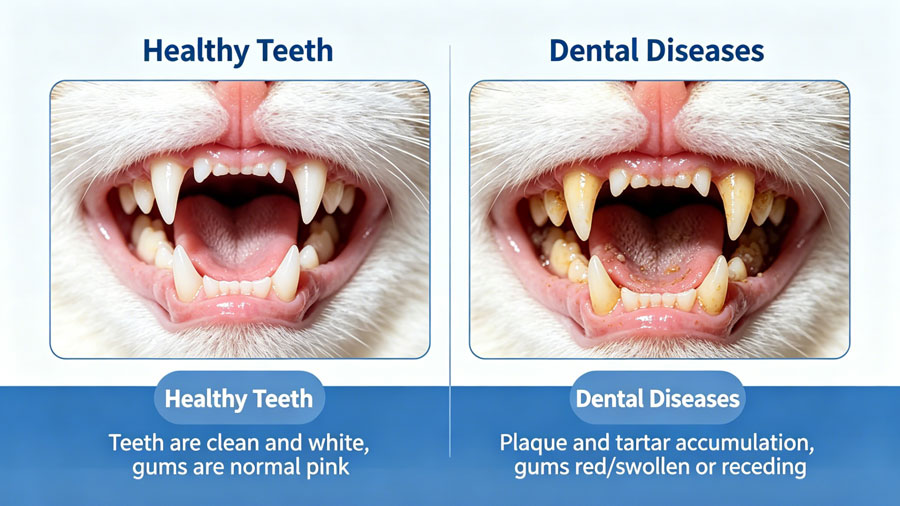
Cats face a different set of dental threats — and several of them are more destructive than a typical human cavity. Studies report that up to 90% of cats over age four have some form of dental disease. Most show no obvious symptoms until the disease is advanced.
The Real Threat: Tooth Resorption in Cats
Tooth resorption (TR) is the dental condition most commonly confused with cat cavities — and it’s far more prevalent.
What Is Tooth Resorption?
TR occurs when specialized cells called odontoclasts begin breaking down the tooth’s structure. The process often starts at the root or just below the gumline, making it invisible from the outside until significant damage has already occurred.
Between 30 and 70% of cats develop tooth resorption. The American Veterinary Dental College (AVDC) classifies TR into two main types based on the extent of root involvement — a distinction that directly affects treatment decisions. [AVDC official classification of tooth resorption]
The result is a tooth that may look intact externally while its interior is collapsing. By the time you see a pinkish defect at the gumline, the tooth is already significantly compromised.
Who’s Most at Risk?
Risk increases with age, but TR isn’t only a senior cat problem:
- Kittens and young adults (under 3): TR is rare but possible
- Adult cats (3–6 years): Early TR is typically silent; routine vet exams are the only reliable detection method
- Senior cats (7+): Highest prevalence; compounded by immune system changes and slower healing
Some breeds — including Abyssinians and Siamese — appear in clinical anecdotal reports more frequently, though large-scale breed studies remain limited.
What Does Treatment Cost?
This is the question competitors never answer. Here’s a realistic breakdown:
| Treatment | Estimated Cost (US) |
|---|---|
| Single tooth extraction (simple) | $150 – $400 |
| Surgical extraction (complex root) | $400 – $800 |
| Full-mouth extraction (severe cases) | $800 – $2,500+ |
| Dental cleaning + X-rays under anesthesia | $300 – $700 |
Note: Costs vary significantly by region, clinic type, and your cat’s overall health status. Always request an itemized estimate before any procedure. Pet insurance with dental coverage can substantially reduce out-of-pocket costs.
cat pet insurance plans with dental coverage
Other Dental Diseases That Look Like Cat Cavities
Gingivitis: The Warning Stage You Can Still Reverse
Gingivitis starts with plaque — a bacterial film that builds up on teeth. When plaque hardens into calculus (tartar), disease-causing bacteria colonize below the gumline. The immune system responds with inflammation: red, swollen, sometimes bleeding gums.
The critical point: gingivitis is reversible. Caught at this stage, consistent home care and a professional cleaning can restore healthy gums. Ignore it, and you move into the next stage.
Periodontal Disease: The Point of No Return
Untreated gingivitis progresses to periodontitis — destruction of the ligaments and bone that anchor teeth. Unlike gingivitis, this damage is permanent. Affected cats may lose teeth, and the infection can spread systemically, with research linking chronic oral disease to kidney and cardiac complications in cats.
If your cat has noticeably bad breath, receding gums, or loose teeth, periodontal disease is a serious possibility that warrants prompt veterinary evaluation.
Feline Stomatitis: The Whole-Mouth Immune Reaction
Stomatitis is an extreme inflammatory response affecting the entire oral cavity — not just the gums. Cats with stomatitis are often in severe pain and may refuse food entirely. It’s frequently managed with full-mouth extraction, which sounds alarming but typically provides dramatic relief. Cats adapt to eating without teeth remarkably well.
Dental Abscess: Know When It’s an Emergency
An abscess develops when bacteria invade the root or surrounding tissue. Signs include facial swelling (especially below the eye), discharge, fever, and sudden behavior changes.
Seek same-day veterinary care if you notice:
- Swelling on the face or jaw
- One eye partially closed or discharging
- Your cat suddenly stops eating and seems in acute pain
- Visible pus or wound near the mouth
How to Spot Cat Dental Problems Early
The 60-Second Home Mouth Check
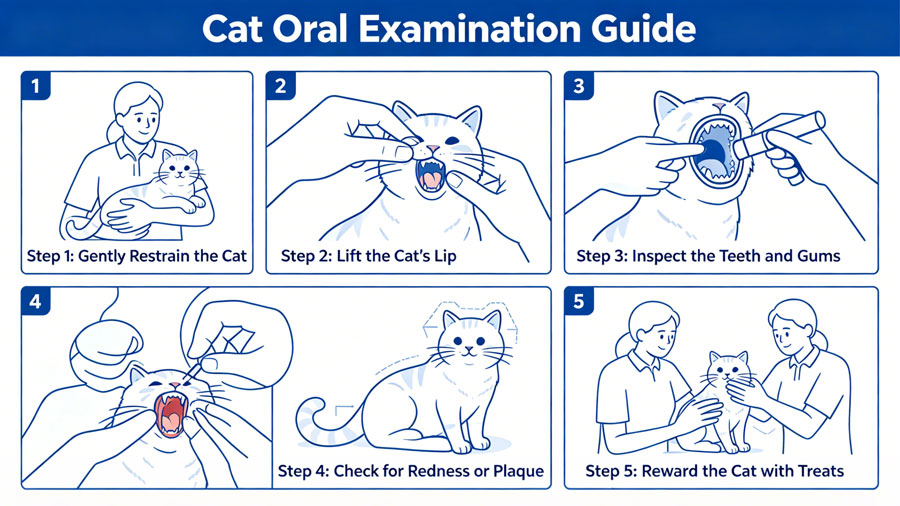
Most dental disease is caught late because owners never look. This monthly habit takes under a minute:
- Choose a calm moment — after a meal, when your cat is relaxed
- Lift the upper lip gently with one finger, starting at the side of the mouth
- Check the gum color — healthy gums are pale pink, firm, and dry at the margin
- Look for red lines along the gumline (early gingivitis)
- Look for brown deposits on teeth near the gumline (tartar)
- Look for pinkish notches at the tooth base (early sign of tooth resorption)
- Smell the breath — occasional fish-breath is normal; persistent foul odor is not
Symptom Urgency Guide
| Symptom | Likely Cause | Action |
|---|---|---|
| Mild bad breath | Plaque buildup | Start brushing; vet within 4 weeks |
| Dropping food while eating | Tooth pain | Vet within 1 week |
| Favoring one side when chewing | Localized pain or TR | Vet within 1 week |
| Red or bleeding gum line | Gingivitis | Vet within 2 weeks |
| Facial swelling | Abscess | Same-day emergency visit |
| Pawing repeatedly at the mouth | Acute pain | Same-day emergency visit |
| Weight loss + dental symptoms | Advanced disease | Urgent |
How to Prevent Cat Dental Disease: A Practical System
Step-by-Step: How to Brush Your Cat’s Teeth
Brushing is the single most effective prevention method. The goal is daily; three to four times weekly makes a real difference.
7-day desensitization plan for resistant cats:
- Days 1–2: Touch your cat’s lips and muzzle during calm moments. No toothbrush yet. Reward with a treat.
- Days 3–4: Lift the lip and gently rub the gums with your finger for 10 seconds. Still no brush.
- Days 5–6: Apply a small amount of cat-formulated enzymatic toothpaste to your finger. Let your cat lick it.
- Day 7+: Introduce the brush. Work in small circles along the outer gum line. You don’t need to reach the inner surfaces — saliva handles those.
Never use human toothpaste. Many formulas contain xylitol, which is toxic to cats, and fluoride at swallowed quantities can cause harm.
When Brushing Isn’t Happening: Ranked Alternatives
| Product | Effectiveness | VOHC Approved? | Best For |
|---|---|---|---|
| Enzymatic toothpaste (with brushing) | ★★★★★ | Yes | Cooperative cats |
| Dental water additives | ★★★☆☆ | Some products | Brush-resistant cats |
| VOHC-certified dental chews | ★★★☆☆ | Yes | Daily supplement |
| Dental wipes/finger pads | ★★☆☆☆ | Limited | Transitional use |
| Prescription dental kibble (Hill’s t/d) | ★★☆☆☆ | Yes | Multi-cat homes |
Look for the VOHC (Veterinary Oral Health Council) seal on any dental product. This means it has passed independent efficacy testing. [VOHC-approved cat dental products list]
Professional Cat Dental Cleanings: What to Expect
Why Anesthesia-Free Cleaning Is a Red Flag
“Anesthesia-free dental cleaning” sounds appealing — safer, cheaper, less stressful. The AVDC considers it ineffective and potentially harmful. Without anesthesia, it’s impossible to probe periodontal pockets, take dental X-rays, or clean below the gumline where disease actually develops. Scraping visible tartar without these steps addresses the cosmetic surface while leaving the underlying disease untreated.
Anesthesia Safety: What to Ask Your Vet
For healthy adult cats, anesthetic risk is low with modern protocols. For senior cats or those with kidney disease, the risk-benefit calculation is more nuanced.
Before any dental procedure under anesthesia, ask:
- Is pre-anesthetic bloodwork included? (Non-negotiable for cats over 7)
- What monitoring equipment will be used during the procedure?
- Who performs the dental X-rays, and are they reviewed before any extractions?
- What is the recovery protocol?
A well-run clinic will welcome these questions.
How Often Does My Cat Need a Professional Cleaning?
- Most adult cats: annually
- Cats with existing disease, prone breeds, or no home care: every 6 months
- Kittens: first dental exam at the 1-year wellness visit
Frequently Asked Questions
Can dry food prevent cat cavities or dental disease?
Dry kibble creates minimal mechanical cleaning benefit — less than most manufacturers imply. Standard dry food should not be relied on as a dental health strategy. Prescription dental diets with specific kibble size and texture (like Hill’s t/d) have clinical evidence behind them; standard kibble does not.
What does tooth resorption look like in cats?
Early TR often looks like a small pinkish or red notch at the point where the tooth meets the gumline. The enamel appears eroded. Many cases are not visible to the naked eye and require dental X-rays and probing under anesthesia to diagnose accurately.
How much does a cat dental cleaning cost?
A routine professional cleaning under anesthesia, including pre-anesthetic bloodwork and dental X-rays, typically runs $300–$700 in the US. Costs increase significantly if extractions are required.
Can I use human toothpaste on my cat?
No. Human toothpastes commonly contain xylitol and fluoride at concentrations harmful to cats if swallowed. Use only enzymatic toothpaste formulated specifically for cats.
What happens if cat dental disease goes untreated?
Dental disease progresses from reversible gingivitis to irreversible periodontitis, tooth loss, chronic pain, and — in severe cases — systemic infection affecting the kidneys and heart. Cats in dental pain often reduce food intake, leading to weight loss and secondary health issues.
My cat had all teeth removed — can she still eat normally?
Yes, and often better than before. Most cats adapt well to eating wet food without teeth. Many owners report their cats eat with more enthusiasm post-extraction once chronic pain is resolved.
The Bottom Line
Cat cavities in the traditional sense are rare. But the dental diseases your cat actually faces — tooth resorption, periodontitis, stomatitis — are common, painful, and largely preventable when caught early.
Start with a monthly home mouth check. Introduce brushing at whatever pace your cat allows. Schedule an annual dental exam with your vet. These three habits won’t eliminate all risk, but they dramatically change the odds.
If you haven’t looked inside your cat’s mouth in the past six months, that’s your sign to start today.
Disclaimer: This article is for informational purposes only and does not constitute veterinary medical advice. Always consult a licensed veterinarian for diagnosis, treatment recommendations, and guidance specific to your cat’s health needs.

