If your cat won’t drink water, you’re not alone—and it’s not always a crisis. But it can become one fast. Cats hide discomfort well, and by the time dehydration shows up clearly, things are already serious. This guide covers the real reasons your cat is avoiding the bowl, how to tell if they’re already dehydrated, and 10 practical fixes that actually work—ranked from free to worth-every-penny.
Why Cats Are Wired to Drink Less Water
Before blaming the bowl, understand this: cats are descended from desert-dwelling wildcats (Felis silvestris lybica). Their ancestors got most of their hydration from prey—not from puddles. That evolutionary history is still running in your cat’s biology today.
wildcat ancestry and feline hydration biology
Still water also triggers instinctive suspicion. In the wild, stagnant water is more likely to carry bacteria and parasites. Moving water signals freshness. That’s not a quirk—it’s survival logic. Keep this in mind when your cat ignores a perfectly clean bowl but goes crazy for a dripping faucet.
How Much Water Does a Cat Actually Need?
Here’s where a lot of pet owners get confused—because two common guidelines exist, and they seem to contradict each other.
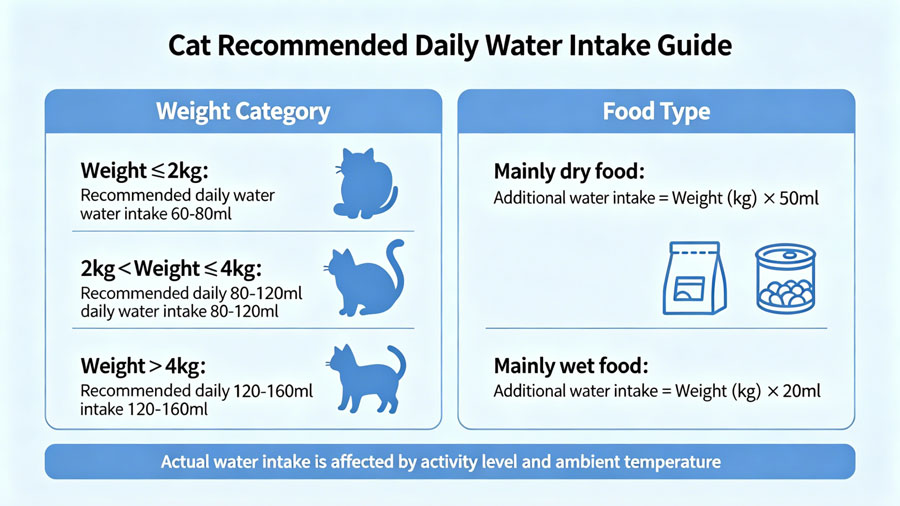
The short answer: a healthy adult cat needs roughly 3.5–4.5 ounces (100–130 ml) of water per 10 lbs of body weight per day, from all sources combined—food and water bowl included.
The discrepancy between guidelines comes down to diet. Cats eating dry food need to drink significantly more from their bowl. Cats on wet food get 70–80% of their moisture from meals and may barely touch the water dish—and that’s fine.
Quick Reference: Daily Water Needs by Weight
| Cat Weight | Dry Food Diet | Wet Food Diet |
|---|---|---|
| 5 lbs | ~4 oz / 120 ml | ~1 oz / 30 ml |
| 8 lbs | ~6 oz / 180 ml | ~1.5 oz / 45 ml |
| 10 lbs | ~8 oz / 240 ml | ~2 oz / 60 ml |
| 12 lbs | ~9 oz / 270 ml | ~2.5 oz / 75 ml |
Note: These are starting estimates. Senior cats, cats with kidney disease, and cats in hot climates need more.
Factors that raise daily water needs:
- Summer heat or dry climates (like the US Southwest)
- High activity levels
- Pregnancy or nursing
- Chronic illness—especially kidney disease, diabetes, or hyperthyroidism
8 Real Reasons Your Cat Won’t Drink Water
Not all water avoidance looks the same. Some causes are easy fixes. Others need a vet.
Behavioral and Environmental Causes
1. The bowl is the problem.
Plastic bowls absorb odors and harbor bacteria in micro-scratches. Many cats experience whisker fatigue—discomfort when their sensitive whiskers press against narrow bowl sides. Dirty water, wrong material, wrong shape: any of these will send your cat looking elsewhere.
2. The location is wrong.
Cats won’t drink where they feel exposed. Bowls near litter boxes, loud appliances, or in high-traffic hallways are often ignored. In multi-cat homes, a dominant cat may block access without you ever seeing it happen.
3. The water doesn’t smell right.
Chlorine and fluoride in tap water are odorless to humans. Not to cats. Some cats refuse tap water entirely and will only drink filtered or refrigerated water.
4. Stress is shutting them down.
A new pet, a move, a change in your schedule—any of these can trigger stress-related behavior changes including reduced drinking. This is more common than most owners realize.
how stress affects cat behavior and appetite
Medical Causes
5. Mouth or tooth pain.
Dental disease is extremely common in cats over age 3. Drinking can hurt. Watch for drooling, pawing at the mouth, or dropping food.
6. Nausea from GI issues.
Gastritis, pancreatitis, and inflammatory bowel disease all suppress the urge to drink. If your cat is also eating less or vomiting, GI involvement is likely.
7. Systemic illness.
Kidney disease, diabetes, and hyperthyroidism can cause increased thirst in early stages—but in advanced stages or during acute episodes, some cats drink less. Any sudden change in drinking habits warrants bloodwork.
8. Post-surgery or medication effects.
Anesthesia causes lingering nausea. Certain antibiotics and pain medications alter taste perception. If your cat recently had a procedure and is now avoiding water, this is a common and overlooked reason.
When in doubt, call your vet. A sudden, unexplained drop in water intake lasting more than 24–48 hours—especially paired with any other symptom—is worth a professional evaluation.
Signs of Dehydration in Cats: What to Check Right Now
Cats are good at masking illness. By the time dehydration is obvious, it’s already moderate to severe.
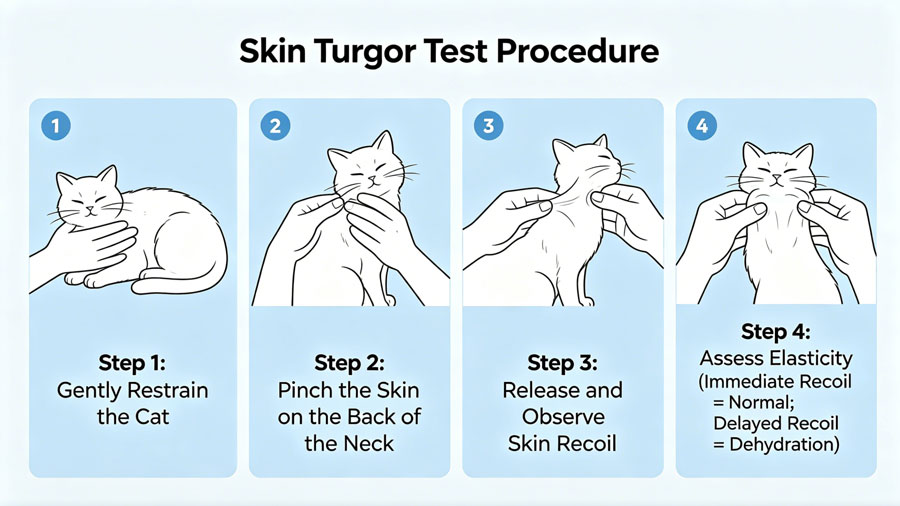
Two At-Home Tests
Skin Turgor Test: Gently pinch the skin at the back of your cat’s neck, lift slightly, and release. Healthy skin snaps back within one second. Slow return—or skin that stays “tented”—signals dehydration.
Gum Check (CRT): Press your index finger firmly against your cat’s gums for two seconds, then release. The white spot should return to pink in under two seconds. Slow refill, dry gums, or gums that feel sticky = dehydration warning.
Dehydration Severity Guide
| Level | Signs | Action |
|---|---|---|
| Mild | Slightly dry gums, less frequent urination | Encourage fluids; monitor closely |
| Moderate | Slow skin return, lethargy, constipation | Call vet today |
| Severe | Sunken eyes, rapid breathing, weakness, no urination | Emergency vet immediately |
Never force water into your cat’s mouth. It won’t fix dehydration, and it can cause aspiration. If your cat is severely dehydrated, IV or subcutaneous fluids from a vet are the only safe solution.
10 Vet-Approved Ways to Get Your Cat Drinking More
Free Fixes First
1. Move the bowl. Away from the litter box. Away from the food bowl (cats instinctively separate eating and drinking areas in the wild). Away from appliances.
2. Fill it to the brim. Reduces whisker contact with bowl edges. Simple and often immediately effective.
3. Try filtered or refrigerated water. Cold, clean water is more appealing to most cats. Swap for a week and see if intake increases.
4. Clean the bowl daily. Rinse with hot water every day. Full wash with dish soap every few days. Biofilm builds up faster than you think.
Low-Cost Upgrades
5. Swap to ceramic or stainless steel. Wide, shallow bowls eliminate whisker fatigue and don’t hold odors. Avoid plastic permanently.
6. Add water or low-sodium broth to meals.
This works. But read the label carefully—many “low-sodium” chicken broths contain onion or garlic powder, which are toxic to cats. Look for broths that are explicitly cat-safe, or make your own.
7. Transition to wet food gradually.
Even replacing one dry-food meal with wet food daily makes a meaningful difference. Most wet foods are 70–80% moisture. Discuss with your vet if your cat has specific dietary restrictions.
Worth the Investment
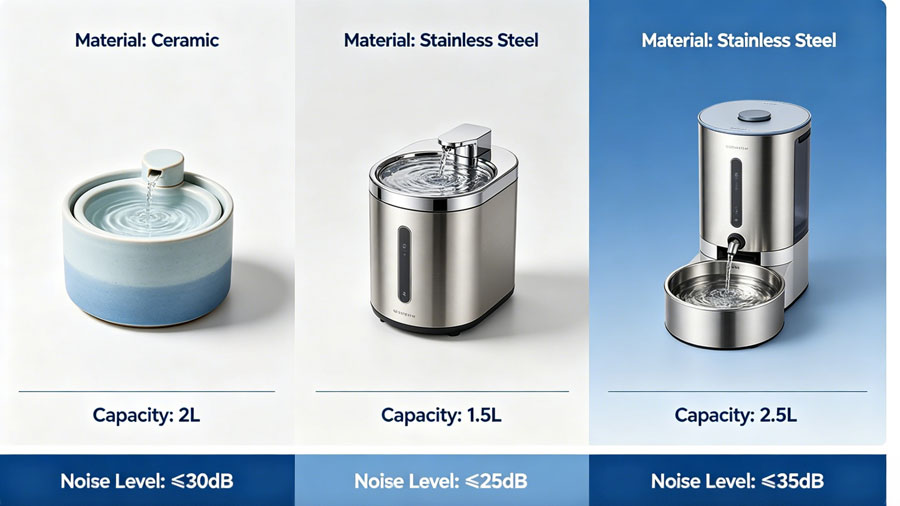
8. Get a cat water fountain.
Running water addresses the instinctive preference for moving water sources. Most cats adapt within a few days. Keep a regular bowl available during the transition.
9. Set up multiple water stations.
One bowl per cat, plus one extra—placed in different rooms and on different floors. For multi-cat households, this eliminates resource guarding without any behavior training required.
10. Add ice cubes.
Some cats respond to floating ice as both a novelty and a temperature preference. It’s also low-effort enrichment. Worth trying before investing in a fountain.
Special Cases That Need a Different Approach
Senior Cats (7+)
Aging cats have reduced thirst sensation and may develop arthritis that makes lowering their head uncomfortable. Use elevated, wide bowls. Consider a fountain with a low-profile spout.
Cats with Chronic Kidney Disease
CKD cats need higher fluid intake than average. Wet food and water fountains are first-line recommendations. In advanced cases, vets may teach owners to administer subcutaneous fluids at home. If your cat has CKD, work directly with your vet on a hydration plan.
feline chronic kidney disease hydration management
Post-Surgery or Newly Adopted Cats
Give it 48–72 hours. Anesthesia nausea fades. New environment stress fades. If water avoidance persists past that window, call the vet.
When to Call the Vet: A Simple Decision Guide
Watch and wait (24 hours): Cat is eating normally, behaving normally, no other symptoms, and diet is primarily wet food.
Call your vet today: Not drinking for 24–48 hours; mild lethargy or reduced appetite; any sign of dry gums or constipation.
Go to emergency care now: Not drinking for 48+ hours; vomiting or diarrhea; weakness, sunken eyes, open-mouth breathing; no urination in 24+ hours.
FAQ: My Cat Won’t Drink Water
My cat won’t drink water but is eating fine—is that OK?
If your cat eats wet food, they may be getting enough moisture through meals. If they’re on dry food only and skipping the bowl, monitor closely and try the tips above. If it persists beyond 48 hours, contact your vet.
How long can a cat survive without water?
Dehydration symptoms begin within 24 hours. After 72 hours without any fluid intake, organ failure becomes a serious risk. This is a medical emergency, not a wait-and-see situation.
Is chicken broth safe to add to my cat’s water?
Only if it’s verified cat-safe. Many commercial broths contain onion or garlic—both toxic to cats. Check every ingredient, or use plain, homemade, unseasoned broth. Ask your vet before adding anything new.
My cat only drinks from the faucet—should I stop letting them?
No need to stop. Let them. But supplement with a water fountain that mimics running water so they stay hydrated when you’re not around to turn on the tap.
Can a cat stay hydrated on dry food alone?
Not easily. Dry food contains only 5–15% moisture. Cats on dry-food-only diets need to drink significantly more water to compensate—and many don’t. This is one reason vets commonly link dry-food-only diets to urinary and kidney issues.
Disclaimer: This article is for informational purposes only and does not constitute veterinary medical advice. Always consult a licensed veterinarian for diagnosis and treatment of your cat’s health concerns.

