Good snacks for cats aren’t about what’s tasty. They’re about what won’t wreck your cat’s diet or send you to the emergency vet. Most owners guess at portions and skip the math entirely. This guide gives you exact amounts, real toxic-food warnings, and a plan for cats with health conditions — not vague advice you’ve already read ten times.
What Actually Makes a Snack “Good” for Cats?
A good snack does two things: it stays within your cat’s calorie budget, and it adds nothing harmful. That’s the whole test.
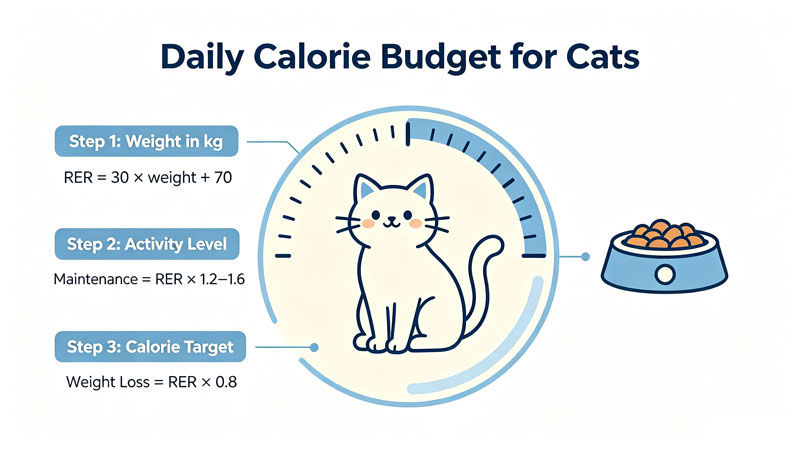
The 10% Rule, Explained With Real Numbers
Vets recommend treats stay under 10% of daily calories. An average 10-pound indoor cat needs roughly 200-250 kcal a day. That leaves a treat budget of 20-25 kcal — about one small piece of cooked chicken, not a handful of store-bought treats.
Complete Food vs. Complementary Treats
This trips up a lot of owners. Pâté and wet food are usually complete — they cover every nutrient your cat needs on their own. Treats are complementary — they fill a gap in enjoyment, not nutrition.
| Type | Nutrient Complete? | Can Be Sole Diet? | Example |
|---|---|---|---|
| Complete pâté | Yes | Yes | Daily wet food |
| Complementary treat | No | No | Freeze-dried chicken |
| Human food snack | No | No | Shrimp, zucchini |
How Many Treats Can You Give a Cat Per Day?
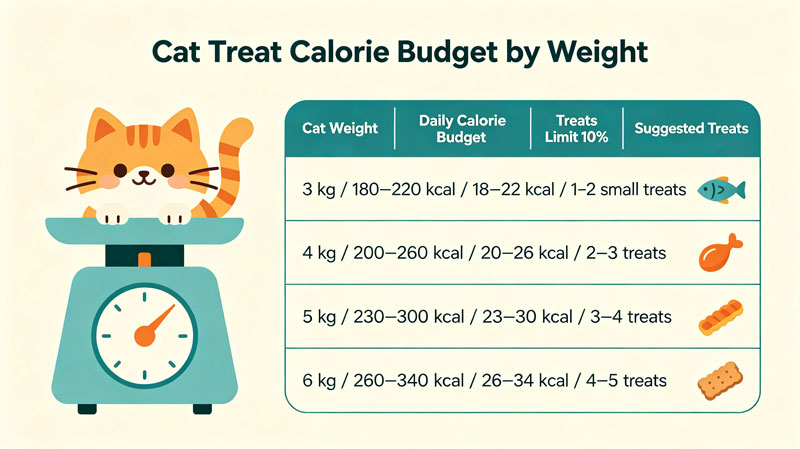
The answer depends on weight, not habit. Here’s a rough breakdown by body weight, based on standard feline calorie needs.
| Cat Weight | Daily Calorie Need | Treat Budget (10%) |
|---|---|---|
| 5 lb (kitten) | ~150 kcal | ~15 kcal |
| 10 lb | ~200-250 kcal | ~20-25 kcal |
| 15 lb | ~280-320 kcal | ~28-32 kcal |
| 20 lb | ~350+ kcal | ~35 kcal |
Kittens and Senior Cats Need Different Math
Kittens burn calories fast but have tiny stomachs — small, frequent treats work better than one big serving. Senior cats often carry kidney or dental issues, so soft, low-sodium options matter more than quantity.
Safe Human Foods for Cats (With Exact Portions)
Skip the vague “in moderation” advice. Here’s what to actually measure out.
Protein-Based Treats
- Cooked shrimp — one small shrimp, plain, no seasoning
- White fish (cod, hake) — under 20g, avoid fatty fish like salmon for spayed/neutered cats
- Cooked chicken or turkey — small cubes, no skin, no salt
Vegetable-Based Treats
- Zucchini — hydrating, low-calorie, good for weight management
- Steamed green beans — filling, minimal calories
- Plain pumpkin puree — a teaspoon can help digestion, especially for hairballs
Occasional Dairy and Fruit
Plain yogurt (a few licks, unsweetened) works for most cats since fermentation reduces lactose. Small cubes of pear, blueberry, or watermelon are fine in tiny amounts — fruit still carries sugar, so keep it rare.
Reading a Commercial Treat Label Like a Vet
Check for an AAFCO statement confirming the treat meets feline nutrient standards. Watch calorie-per-treat numbers on the label — some “healthy” treats pack 10+ kcal each, blowing past a small cat’s entire treat budget in one piece.
AAFCO nutrient adequacy statements
Foods That Look Like Treats But Are Toxic
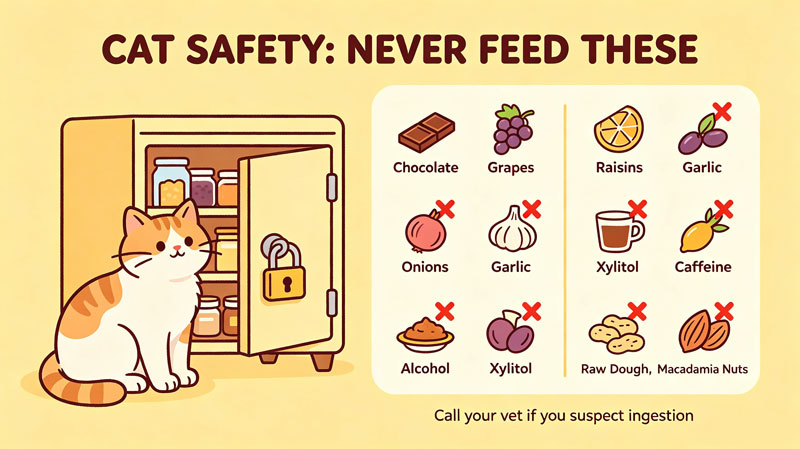
Some foods sit right next to safe snacks on your counter and still put cats at serious risk.
- Chocolate (theobromine)
- Grapes and raisins
- Onion and garlic
- Raw dough
- Avocado (persin)
- Xylitol-sweetened foods
What to Do If Your Cat Eats Something Toxic
Don’t wait for symptoms before acting. Call the ASPCA Animal Poison Control Center right away and have the food packaging on hand. Watch for vomiting, drooling, lethargy, or tremors within the first few hours. Don’t induce vomiting without guidance — some substances cause more damage coming back up.
ASPCA Animal Poison Control Center
Treats for Cats With Health Conditions
Overweight Cats
Swap treats for a few pieces of their regular kibble. It satisfies the begging without adding extra calories on top of their diet.
Kidney Disease
Avoid salty treats entirely — sodium and phosphorus load matters more here than calorie count.
Diabetic Cats
Stick to protein, skip fruit and starchy vegetables. Shrimp and plain chicken are safer bets than anything containing natural sugars.
Using Treats for Training, Not Just Bonding
Treats work best as rewards tied to behavior, not as unconditional handouts. Use them in puzzle feeders or hide-and-seek games to combine mental stimulation with mealtime. This cuts down on begging because your cat learns treats come from effort, not whining at the table.
FAQ: Good Snacks for Cats
Can cats eat treats every day?
Yes, as long as treats stay under 10% of daily calories and the rest of their diet stays balanced.
Are cat treats necessary?
No. They’re optional. A complete diet already covers your cat’s nutritional needs.
Can kittens have treats?
Sparingly. Kittens need calorie-dense complete food more than snacks, so treats should be rare and tiny.
Do dental treats actually work?
Some do, if they carry a VOHC (Veterinary Oral Health Council) seal. Without it, claims are mostly marketing.
Can treats replace a meal occasionally?
No. Treats lack complete nutrition and shouldn’t substitute for a real meal, even once.
Disclaimer: This article is for general informational purposes only and does not replace professional veterinary advice. Always consult your veterinarian before changing your cat’s diet, especially if your cat has an existing health condition.

