You bought the bed. Your cat sniffed it once and walked away. If you’re asking why doesn’t my cat like the cat bed, the answer isn’t stubbornness — it’s instinct. This guide breaks down the real causes, the fixes that work, and the signs worth a vet visit.
Is It Preference, or Something Else? Quick Diagnostic First
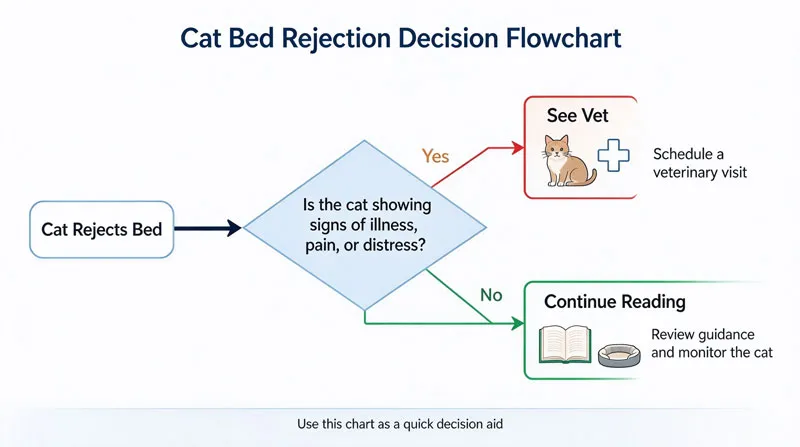
Before you try another bed or another blanket trick, rule out the obvious. Most bed rejection is behavioral. Some isn’t.
Ask yourself three questions:
- Did this start suddenly, or has your cat never used the bed?
- Has your cat also changed how it jumps, climbs, or uses the litter box?
- Is your cat older than seven, or does it have a known joint issue?
If you answered yes to the second or third question, skip ahead to the vet flags section below. If not, keep reading — you’re almost certainly dealing with a comfort or security issue, not a medical one.
Why Cats Reject New Beds: The Science Behind It
Scent Comes Before Comfort
Cats don’t evaluate a bed the way you do. They smell it first. A cat’s nose carries far more scent receptors than yours, and a brand-new bed smells like a factory, not like home. Until it carries your cat’s scent — or yours — it reads as neutral territory at best, suspicious at worst.
Territory Isn’t Just a Concept — It’s a Map
Cats build a mental map of their space using scent glands on their face, paws, and flanks. Every spot they rub against gets marked. A new bed sits outside that map entirely. It takes time, and repeated contact, before your cat files it under “safe.”
The Wild Ancestor Still Runs the Show
Domestic cats split from wild ancestors roughly 9,000 years ago, but sleep instincts changed very little. Wild felids chose enclosed, scent-familiar dens for one reason: exposure while sleeping means vulnerability. Your cat is running the same risk calculation on your living room floor.
Research on feline sleep behavior and domestication
6 Common Reasons Your Cat Won’t Use the Bed
- Chemical or unfamiliar scent — new materials smell sterile, not safe.
- Wrong location — too loud, too exposed, or too far from the action.
- Texture mismatch — slippery, noisy, or overly plush surfaces feel unstable.
- Wrong shape for how your cat sleeps — stretchers and curlers need different beds.
- Pain or reduced mobility — a bed that’s hard to enter gets skipped.
- Competition in multi-cat homes — one bed, three cats, zero peace.
Each of these has a fix. We’ll cover placement, material, and multi-cat strategy below.
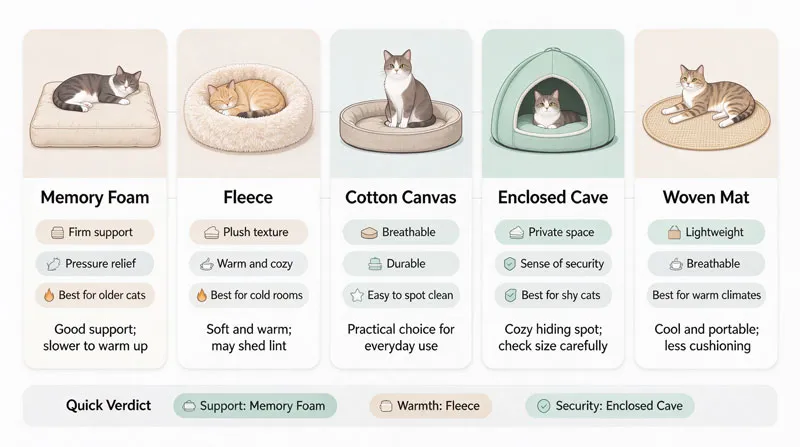
What Materials Actually Matter (And Why New Beds Smell “Off”)
That factory smell isn’t imagination. Many beds are treated with flame retardants or bonded with adhesives during manufacturing, and both off-gas for days after unboxing. Cats detect this immediately. You often can’t.
Look for beds certified free of harmful chemical treatments — certifications like OEKO-TEX or CertiPUR-US exist specifically to flag this, and checking for them takes thirty seconds on a product page.
| Material | Best For | Pros | Cons |
|---|---|---|---|
| Memory foam | Senior or arthritic cats | Strong joint support | Retains heat, can feel unstable underfoot |
| Fleece | Cats who curl tightly | Soft, easy to wash | Less structural support |
| Raised mesh | Warm climates | Breathable, cool | No enclosure, less security |
| Faux fur/sherpa | Cold climates, face-rubbers | Mimics mother’s warmth | Traps dust and hair |
| Enclosed/cave style | Anxious or shy cats | High sense of security | Can trap heat |
Placement Matters More Than the Bed Itself
A perfect bed in the wrong spot still gets ignored. Cats look for four things before they’ll settle: a clear sightline to the room, freedom from foot traffic, stable temperature, and some distance from loud appliances.
Seasonal Placement Across North America
Cats in colder regions gravitate toward heat sources — near a vent, a sunny window, or a radiator. In warmer climates, the opposite applies: elevated, shaded, well-ventilated spots win out. If your cat avoids the bed only in summer or only in winter, location is likely the culprit, not the bed.
Guide to enrichment and safe indoor environments for cats
How to Get Your Cat to Actually Use the Bed
This works better as a sequence than a grab-bag of tips.
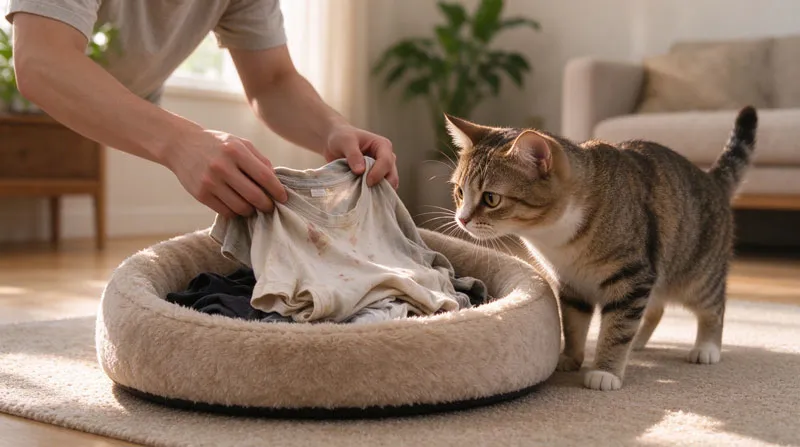
Week 1 — Scent transfer. Place a worn t-shirt or your cat’s favorite blanket in the bed. Don’t wash it first.
Week 2 — Positive association. Scatter treats near the bed, or use catnip if your cat responds to it. Never physically place your cat in the bed — that creates the opposite of the association you want.
Week 3 — Placement testing. Move the bed to two or three different high-traffic-free spots and watch which one gets sniffed longest.
Give the full process two to three weeks before deciding it failed. Cats test new objects slowly, and rushing the timeline is the most common reason owners give up too early.
Multi-Cat Households: Why One Bed Rarely Works
If you have more than one cat, a single shared bed almost guarantees at least one cat avoids it — usually the lower-confidence one. Sleep zones function like resources, and cats guard resources the same way they guard food bowls or litter boxes.
A reasonable starting ratio is one bed per cat, plus one extra, placed in separate parts of the home rather than side by side. Watch for one cat consistently blocking access to a bed; that’s a sign of tension worth addressing before it escalates into bigger behavioral issues.
When Bed Rejection Signals a Health Issue
Most bed avoidance is behavioral. Some cases point to pain or age-related decline, and it’s worth knowing the difference.
Watch for:
- A cat that used to love its bed and suddenly stopped
- Difficulty jumping into a bed with raised sides
- Stiffness after rest, or reluctance to curl tightly
- Changes in litter box habits alongside the bed avoidance
None of this replaces a professional exam. If your cat shows two or more of these signs, book a vet visit rather than trying another bed first.
senior cat care and mobility guidelines
Matching the Bed to Your Cat’s Sleep Style
| Sleep Style | What It Looks Like | Bed Type to Try |
|---|---|---|
| The Stretcher | Sleeps flat, legs extended | Low-side rectangular pad |
| The Curler | Tight ball, paws tucked | Round bolster or donut bed |
| The Hider | Seeks closets, under furniture | Covered or cave-style bed |
| The Sunbather | Follows warm spots around the house | Portable mat or window perch |
| The Senior | Moves slowly, avoids jumping | Low-entry orthopedic bed |
Best cat beds by sleep style and age
How We Researched This Guide
This article draws on published feline behavior research, veterinary guidance on senior cat mobility, and material safety standards used in pet product manufacturing. Where product recommendations appear, they reflect independent research rather than paid placement.
Frequently Asked Questions
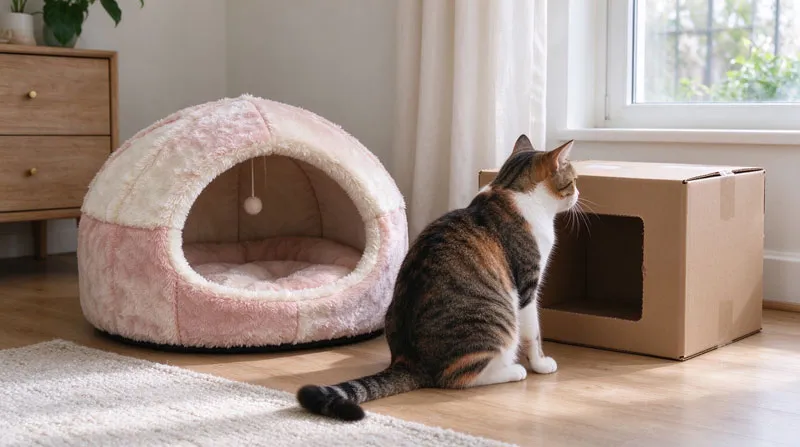
Why does my cat prefer the cardboard box the bed came in?
Boxes offer full enclosure and already carry your scent from handling. That combination beats a sterile new bed almost every time.
How long should I wait before giving up on a new bed?
Give it two to three weeks with consistent scent transfer and placement testing before assuming the bed is a poor fit.
How often should I wash my cat’s bed?
Once a week with unscented detergent. Built-up scent from dirt or other pets can make a familiar bed suddenly feel foreign.
My cat used to use the bed and suddenly stopped. What happened?
Sudden changes often point to pain, mobility loss, or stress from a household change. If it’s not tied to an obvious disruption, a vet check is the safer next step.
Do cats’ bed preferences change as they age?
Yes. Older cats often shift toward lower, firmer, easier-to-enter beds as joints stiffen, even if they preferred plush, high-sided beds when younger.
Disclaimer: This article is for general informational purposes only and does not replace professional veterinary advice. If your cat shows signs of pain, mobility changes, or sudden behavioral shifts, consult a licensed veterinarian.

