Cat dental problems rarely announce themselves. Your cat won’t limp or whimper. She’ll just quietly stop eating on one side of her mouth, and you’ll miss it for months. By the time most owners notice something’s wrong, the disease has already progressed. This guide breaks down the real signs, what treatment costs, and what actually protects your cat’s teeth — not vague advice, but the specifics your vet wishes you knew earlier.
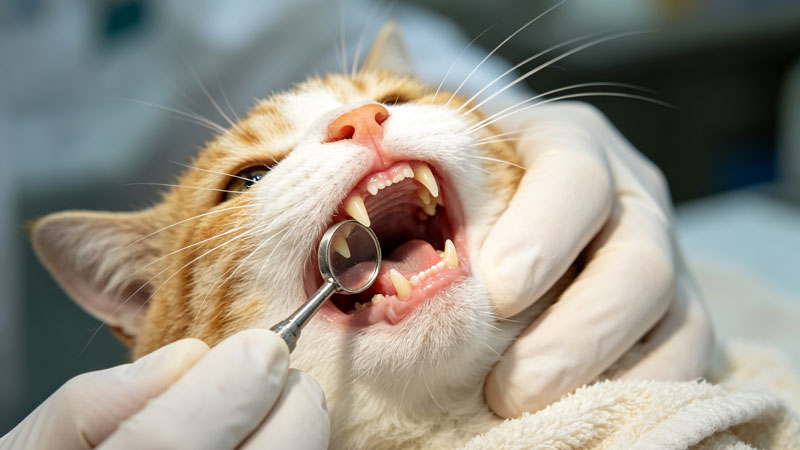
What Counts as a Cat Dental Problem?
There are three conditions doing almost all the damage.
Gingivitis comes first. Plaque builds up, bacteria settle in below the gumline, and the gums turn red and swollen. Catch it here and it’s fully reversible.
Periodontitis is what happens when gingivitis goes untreated. The tissue holding the tooth in place starts breaking down. This stage doesn’t reverse — you’re managing it, not curing it.
Tooth resorption is different again. The tooth itself starts dissolving from the inside out, usually starting near the gumline. Nobody fully understands why it happens, but it’s the leading cause of tooth loss in cats, affecting an estimated 30-70% of the feline population at some point.
| Condition | Reversible? | Main Risk |
|---|---|---|
| Gingivitis | Yes | Untreated plaque |
| Periodontitis | No | Untreated gingivitis |
| Tooth Resorption | No | Unknown cause |
American Veterinary Dental College’s staging guidelines
10 Signs of Cat Dental Problems (And How Urgent Each One Is)
Not every sign means an emergency. Here’s how to triage what you’re seeing.
🟢 Watch and schedule a routine check
- Bad breath that’s gotten worse — a little fish breath is normal; a persistent, sour smell isn’t.
- Visible tartar — yellow or brown crust along the gumline. Plaque is soft; tartar is hardened and needs a professional scale.
- Mild drooling — some cats drool when relaxed. A sudden increase is the tell.
🟡 Book a vet visit this week
- Eating changes — dropping food, chewing on one side, favoring wet over dry.
- Pawing at the mouth or face-rubbing more than usual.
- Red or swollen gums, especially a thin red line right where gum meets tooth.
- Behavioral withdrawal — hiding, irritability, avoiding being touched near the face.
- Weight loss or patchy grooming — pain makes both eating and self-grooming harder.
🔴 Seek care within 24-48 hours
- Bleeding gums or blood in saliva.
- Loose or missing teeth.
- Fruity-smelling breath paired with lethargy — this combination can point to diabetic ketoacidosis, not just a dental issue, and needs same-day attention.
Why Cats Hide Dental Pain So Well
Cats are prey animals by instinct. Showing pain openly used to make them a target in the wild, so they’ve evolved to mask it. That’s why owners so often miss the early stages — the cat isn’t hiding anything on purpose, she just doesn’t have the instinct to broadcast pain the way a dog does. This is exactly why routine mouth checks matter more than waiting for obvious symptoms.
how to check your cat’s teeth at home safely
Which Cats Face Higher Risk
Age matters most. Studies estimate that more than half of cats over age four have some form of dental disease, and the number climbs with age. Certain breeds — Persians, Siamese, and Abyssinians among them — show higher rates of periodontal issues, likely tied to jaw structure and genetics. Diet plays a role too, though the dry-versus-wet-food debate is more nuanced than most articles admit: neither food type alone prevents dental disease without proper brushing or dental care layered on top.
How Vets Actually Diagnose It
A visual exam only tells part of the story. Most dental disease lives below the gumline, which is why your vet will recommend dental X-rays under anesthesia. This isn’t overkill — it’s the only way to see resorption or bone loss that isn’t visible to the naked eye. Modern feline anesthesia protocols are considered low-risk for healthy cats, including seniors, when proper pre-anesthetic bloodwork is done first.
AAHA anesthesia guidelines for veterinary practices
What Treatment Actually Costs
This is the part most articles skip entirely.
| Procedure | Typical Cost Range (US) | What Affects Price |
|---|---|---|
| Routine cleaning (scale & polish) | $300–$700 | Anesthesia time, bloodwork |
| Single tooth extraction | $500–$900 | Complexity, X-rays |
| Multiple extractions | $800–$2,000+ | Number of teeth, recovery care |
| Advanced/referral cases | $1,500–$3,000+ | Specialist fees, imaging |
Prices vary heavily by region and clinic. Always ask for a written estimate before scheduling, since dental cases often have a range depending on what the vet finds once your cat is under anesthesia.
Here’s the number that matters more than any single price: a $400 annual cleaning is far cheaper than a $2,000 multi-tooth extraction down the line. Prevention isn’t just gentler on your cat — it’s the better financial decision, too.
At-Home Prevention That Actually Works
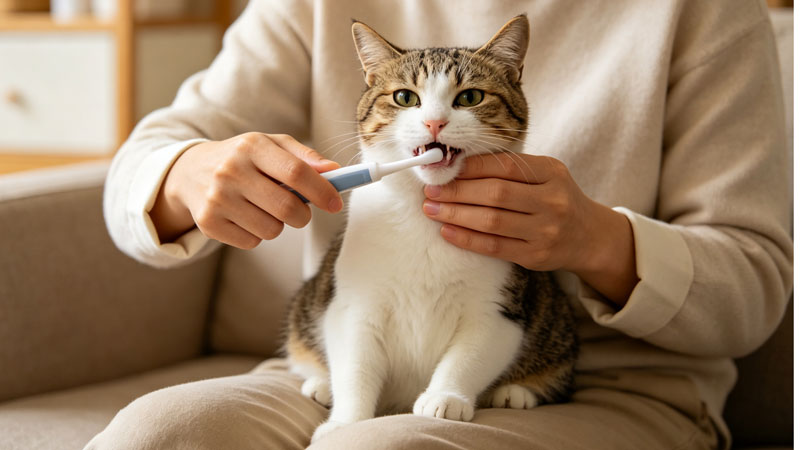
Brushing is still the gold standard. Daily is ideal; three times a week is the realistic minimum for meaningful plaque control. Use a cat-specific enzymatic toothpaste — human toothpaste contains xylitol and fluoride levels that are toxic to cats. Start slow: let her lick the paste off your finger for a few days before introducing a brush.
Dental treats, water additives, and prescription dental diets can help, but only if they carry the VOHC Seal of Acceptance (Veterinary Oral Health Council). Products without that seal haven’t been tested to the same standard, and marketing claims alone aren’t proof.
One myth worth killing: dry kibble does not clean your cat’s teeth on its own. Most cats crunch kibble into pieces rather than chewing it thoroughly, which limits any mechanical cleaning effect.
Frequently Asked Questions
Is cat dental disease preventable?
Mostly, yes. Regular brushing and annual professional cleanings prevent the vast majority of gingivitis and periodontitis cases. Tooth resorption is harder to prevent since its cause isn’t fully understood.
How often should a cat’s teeth be professionally cleaned?
Most healthy adult cats benefit from a cleaning once a year. Cats with a history of dental disease may need it every six months.
Can dental disease in cats be fatal?
Directly, rarely. Indirectly, yes — untreated infections can spread to the bloodstream and affect organs like the kidneys and heart over time.
Is anesthesia safe for older cats getting dental work?
Generally, yes, when pre-anesthetic bloodwork confirms your cat is a good candidate. Age alone isn’t a reason to skip needed dental care.
Do indoor cats get dental disease less often?
No. Indoor and outdoor cats develop dental disease at similar rates. Lifestyle affects injury risk, not plaque buildup.
Key Takeaways
- Gingivitis is reversible. Periodontitis and tooth resorption are not — catch problems early.
- Fruity breath plus lethargy is an emergency, not a dental quirk.
- Annual cleanings cost far less than late-stage extractions.
- Only trust dental products carrying the VOHC seal.
- Brush at least three times a week for real results.
Disclaimer: This article is for informational purposes only and does not replace professional veterinary diagnosis or treatment. Always consult a licensed veterinarian regarding your cat’s specific health needs.

