You said yes to adopting a cat. Now you’re staring at a pet store aisle — or an Amazon rabbit hole — wondering what you actually need. The cat must haves list online? Mostly surface-level. This guide cuts through it: what to buy, what to skip, and what most checklists dangerously leave out.
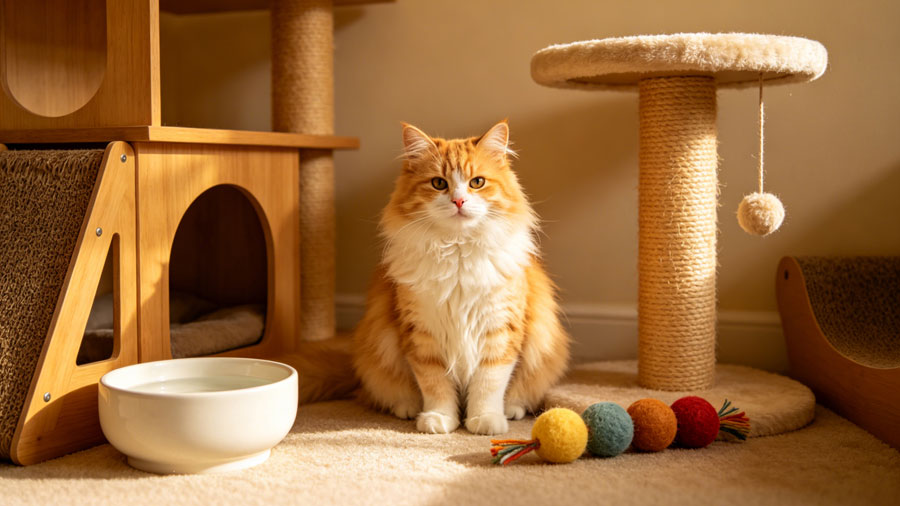
What Cats Actually Need vs. What Brands Want You to Buy
Before any product recommendations, here’s the honest filter: does this item address a biological need or a behavioral need? If yes, it belongs on your list. If it’s purely aesthetic, it can wait.
According to the American Pet Products Association, U.S. cat owners spend an average of $902 per year on their cats — but a well-planned first setup doesn’t have to be expensive. The goal is smart, not maximal.
Must-Have vs. Nice-to-Have: A Quick Reference
| Category | Must Have | Nice to Have |
|---|---|---|
| Bathroom | Litter box + unscented litter + scoop | Self-cleaning litter box |
| Feeding | Stainless steel food & water bowls | Automatic feeder, water fountain |
| Safety | Breakaway collar + ID tag | GPS tracker |
| Comfort | Carrier, one bed or hideaway | Cat stroller |
| Scratching | One scratching post | Full cat tree |
| Enrichment | 3–4 rotating toys | Motorized interactive toys |
Does Your Cat’s Age Change the List?
Yes — significantly.
- Kittens (under 1 year): Avoid clay or silica litter (ingestion risk during grooming). Choose low-sided litter boxes for easy entry. All toys should be large enough to prevent swallowing. [kitten-safe litter types]
- Adult cats (1–10 years): Standard setup applies. Focus on enrichment — this is the age group most prone to boredom-driven destruction.
- Senior cats (10+): Prioritize ramps or steps to elevated spots. Switch to joint-friendly bedding. Consider a shallower litter box entry point.
The Litter Box Setup — Get This Right First
This is the single most important item in your home. Get it wrong and you’ll have a cat using your laundry pile instead.
How Many Litter Boxes Do You Need?
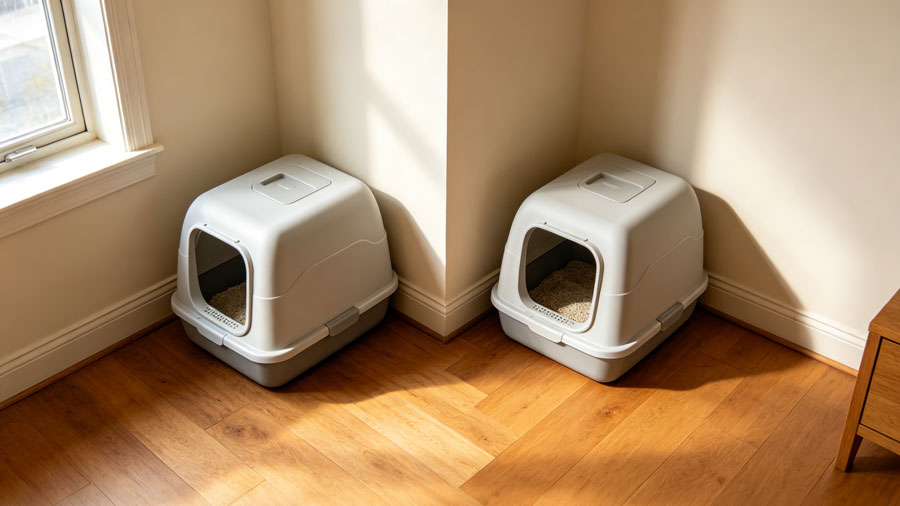
The standard veterinary recommendation is one box per cat, plus one extra. So one cat = two boxes. This isn’t a sales pitch — it’s about territory. Cats avoid shared or “used” boxes, and that avoidance leads to house-soiling problems that are hard to reverse.
Clumping vs. Non-Clumping Litter — Which Is Safer?
| Litter Type | Best For | Safety Note |
|---|---|---|
| Clumping clay | Adult cats, easy scooping | Avoid for kittens under 3 months — ingestion risk |
| Silica gel crystals | Low-maintenance households | Not recommended for kittens or cats with respiratory issues |
| Paper/recycled pellets | Post-surgery recovery, kittens | Least tracking, biodegradable |
| Tofu/plant-based | Eco-conscious owners | Safe for kittens, flushable in most states |
Always go unscented. Artificial fragrances are a leading reason cats reject their litter box — their sense of smell is roughly 14 times stronger than ours.
Open Box vs. Covered Box — What Vets Prefer
Most cats prefer open boxes. The logic: covered boxes trap odor inside, which bothers the cat far more than it bothers you. If you’re using a covered box because of smell, the real fix is scooping twice daily — not a lid.
Self-cleaning boxes can work well for multi-cat households, but they’re not a substitute for the N+1 rule. They also require a transition period; some cats won’t use them at all.
Food, Water & Bowls — The Setup That Affects Long-Term Health
Why Bowl Material Is Not Trivial
Plastic bowls are the most common — and the most problematic. Micro-scratches on plastic surfaces harbor bacteria, and repeated plastic contact is associated with feline acne (black chin spots). Stainless steel or ceramic bowls are the standard recommendation from veterinary dermatologists.
Do Cats Actually Drink More from Fountains?
Often, yes — and this matters. Cats evolved from desert animals with a naturally low thirst drive. When they drink too little, it concentrates urine and raises the risk of feline lower urinary tract disease (FLUTD), one of the most common and costly vet visits for cat owners.
Running water triggers drinking behavior more reliably than a still bowl. If your cat has had any urinary issues, a fountain moves from “nice to have” to a genuine health tool.
best water fountains for cats with urinary health issues
How to Read a Cat Food Label
This part most checklists skip entirely. Before you buy, look for:
- “Complete and balanced” statement from AAFCO (Association of American Feed Control Officials) — this is the minimum quality standard in the U.S.
- Named protein source first (e.g., “chicken,” not “poultry by-product meal”)
- Life stage match — kitten food, adult food, and senior food have meaningfully different nutrient ratios
Avoid foods where the first ingredient is a grain or corn syrup. Cats are obligate carnivores. Protein drives everything.
how to read AAFCO pet food labels
Scratching & Climbing — Work With Cat Biology, Not Against It
Why Cats Scratch (And Why You Can’t Stop It)
Scratching isn’t bad behavior. It’s how cats mark territory (scent glands in paws), maintain claw health, and stretch their bodies. Your job is to give them a legal outlet — not eliminate the behavior.
Choosing the Right Scratching Surface
| Option | Best For | Price Range |
|---|---|---|
| Vertical sisal post | Most cats, especially those scratching furniture | $20–$60 |
| Cardboard horizontal scratcher | Cats who scratch carpets/floors | $8–$20 |
| Cat tree with scratching posts | Multi-cat homes, kittens | $60–$200+ |
| Wall-mounted shelves | Space-limited apartments | $40–$150 |
Placement matters as much as the product. Put the scratching post next to wherever your cat already sleeps. Cats scratch after waking — if the post is in a back hallway, they’ll use the couch instead.
Enrichment & Play — The Cat Must Haves Most Lists Underestimate
What Happens Without Enough Stimulation
Under-stimulated cats don’t just get bored. They develop behavioral problems: over-grooming, aggression, excessive vocalization, and stress-related illness. The ASPCA identifies environmental enrichment as one of the top factors in indoor cat welfare.
Match Toys to Your Cat’s Hunt Style
Not all cats play the same way. Watch how yours engages:
- Chasers: Respond to balls, crinkle toys, laser pointers (always end laser sessions with a physical toy they can “catch”)
- Stalkers: Prefer wand toys and feather attachments they can ambush
- Wrestlers: Like stuffed toys they can kick and bite — great for solo play
The Rotation Rule
Keep 4–5 toys accessible. Rotate them weekly. A toy that’s been “away” for a week feels new again. This keeps enrichment high without constantly buying new things. Cardboard boxes, paper bags (handles removed), and toilet paper rolls are genuinely effective fillers between rotations.
Safety Essentials — The Section Most Checklists Skip
Breakaway Collars — Non-Negotiable for Indoor Cats
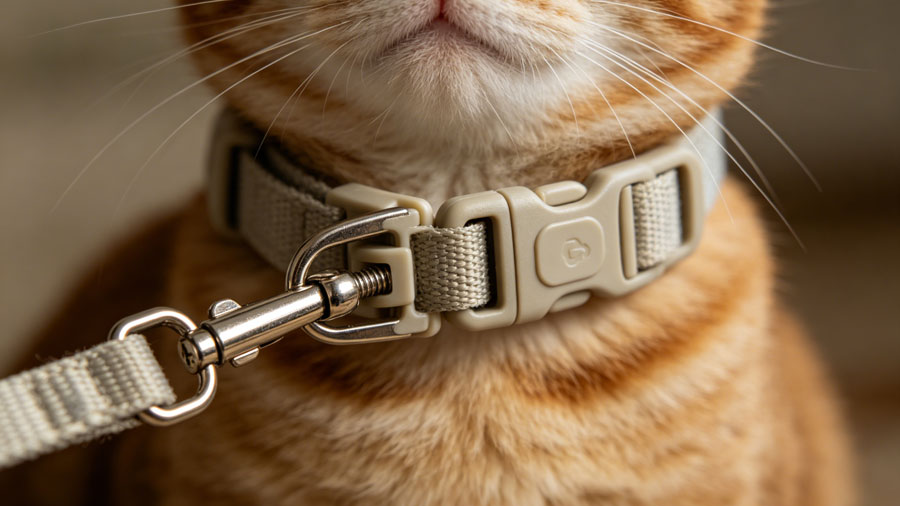
A standard collar can kill a cat that gets it caught on a cabinet hinge or fence post. Breakaway collars release under pressure — they’re the only safe collar for unsupervised wear. Test the fit with the “two-finger rule”: you should be able to slide two fingers underneath comfortably.
Microchip vs. GPS Collar
| Microchip | GPS Collar | |
|---|---|---|
| Cost | $25–$50 (one-time) | $30–$100 + monthly subscription |
| Range | Works nationwide (if scanned) | Real-time tracking |
| Maintenance | None | Charging required |
| Failure risk | Very low | Battery death, signal loss |
| Best for | All cats, always | Cats with outdoor access |
Microchipping is permanent ID. GPS is real-time tracking. They’re not competing products — ideally you have both.
Hidden Household Hazards
These kill cats every year — and never appear on standard supply checklists:
- Toxic plants: Lilies (all species) are fatally toxic to cats. Even small amounts cause kidney failure. Check any houseplants against the ASPCA’s poison control database before bringing them home.
- Electrical cords: Cats chew them. Use cord covers or bitter-apple spray on exposed cables.
- Cleaning products: Pine-based cleaners and phenol compounds are toxic to cats. Read labels.
- Essential oil diffusers: Tea tree, eucalyptus, and citrus oils are all cat-toxic — even diffused in the air.
Budget Breakdown: First-Year Cat Costs, Realistically
| Category | Budget | Mid-Range | Premium |
|---|---|---|---|
| Litter box setup | $25–$40 | $50–$90 | $150–$500+ |
| Food (monthly) | $20–$30 | $40–$65 | $80–$120 |
| Toys & enrichment | $15–$25 | $35–$60 | $100+ |
| Vet (first year, healthy cat) | $150–$250 | $300–$500 | Varies |
| Collar + microchip | $30–$50 | $60–$100 | $100+ |
| Carrier | $25–$40 | $50–$80 | $120+ |
Estimated first-year total: $500–$1,200 for a healthy adult cat. Kittens and senior cats typically run higher due to more frequent vet visits.
The Complete Cat Must Haves Checklist
🟥 Non-Negotiable (Buy Before Day One)
- Litter box (one per cat + one extra)
- Unscented clumping litter (or paper-based for kittens)
- Litter scoop
- Stainless steel or ceramic food bowl
- Stainless steel or ceramic water bowl
- Age-appropriate AAFCO-certified cat food
- Carrier (hard-sided preferred for safety)
- Breakaway collar + ID tag
- Scratching post (sisal, vertical)
🟨 Strongly Recommended (First Month)
- 3–5 toys (mix of types)
- Bed or enclosed hideaway
- Nail clippers (cat-specific)
- Brush or grooming mitt
- Microchip (schedule at first vet visit)
🟩 Worthwhile Upgrades (When Budget Allows)
- Water fountain
- Cat tree or wall shelves
- Additional scratching surfaces
- Pet insurance (research before your first vet visit)
- Cord protectors or bitter spray
FAQ: Cat Must Haves — Your Questions Answered
Q: What do I absolutely need before bringing a cat home?
At minimum: litter box, litter, scoop, food and water bowls, age-appropriate food, a carrier, and a breakaway collar. Everything else can be added in the first few weeks.
Q: How much does it cost to set up for a new cat?
A functional, vet-approved basic setup runs $150–$300. First-year total costs (including vet visits for a healthy adult cat) typically land between $500 and $1,200.
Q: Do indoor cats need different supplies than cats with outdoor access?
Yes. Indoor cats need more deliberate enrichment (toys, climbing structures, window access) because they don’t self-stimulate through hunting. Outdoor cats need GPS tracking, more frequent parasite prevention, and stricter vaccine schedules.
Q: What cat products do vets actually recommend?
Vets consistently prioritize: stainless steel or ceramic bowls, unscented litter, AAFCO-certified food, breakaway collars, and microchipping. For enrichment, any toy that triggers hunting behavior counts — price is irrelevant.
Q: Is a water fountain really necessary?
Not strictly necessary, but cats with any history of urinary tract issues benefit meaningfully from increased water intake. A fountain is one of the most evidence-supported upgrades for long-term urinary health in indoor cats.
Wrapping Up
The best cat setup isn’t the most expensive one. It’s the one that covers the biological basics, supports natural behavior, and doesn’t create hidden safety risks. Start with the non-negotiables, observe your cat for a few weeks, then layer in upgrades based on what they actually use.
Disclaimer: The information in this article is intended for general educational purposes only and does not constitute veterinary advice. Always consult a licensed veterinarian for guidance specific to your cat’s health, age, and individual needs. Product recommendations reflect general best practices and are not a substitute for professional medical or behavioral consultation.

