Quick Answer: A cat in pain often hunches with an arched back, tucks their legs tight under their body instead of stretching out, lowers their head below shoulder level, or holds a stiff “guarding” stance around one body part. These postures differ from normal resting positions and usually show up alongside other changes like hiding or skipping meals.
Your cat’s body is talking. Cat positions in pain rarely include a cry for help — cats mask discomfort as a survival instinct, so posture becomes your best early clue. This guide breaks down the exact positions to watch for, what they mean, and when a vet visit can’t wait.
Why Cats Hide Pain Through Posture, Not Sound
Cats sit in the middle of the food chain. In the wild, looking weak invites attack. That instinct never left your living room cat, which is why vocal signs of pain show up late — often only once pain is severe.
Posture tells a different story. Body position shifts happen before a cat starts limping obviously or crying out, making it the most reliable early-warning system pet owners have.
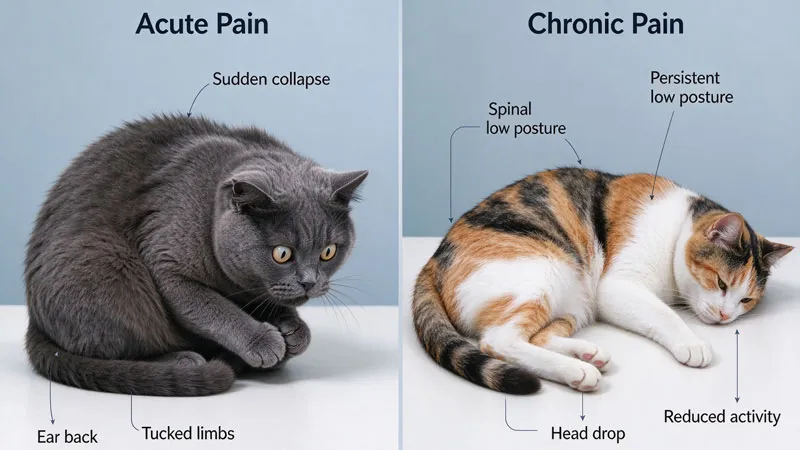
Acute Pain vs. Chronic Pain Posture
Acute pain (an injury, a bee sting, post-surgery recovery) tends to produce sudden, dramatic posture changes. Chronic pain — arthritis, dental disease — builds gradually, so the shift is easy to miss unless you’re watching for it over weeks.
Table 1: Acute vs. Chronic Pain Posture
| Feature | Acute Pain | Chronic Pain |
|---|---|---|
| Onset | Sudden | Gradual, over weeks/months |
| Typical posture | Rigid guarding, flinching | Stiffness, reluctance to stretch |
| Activity change | Sharp drop overnight | Slow decline |
| Common cause | Injury, surgery, UTI | Arthritis, dental disease |
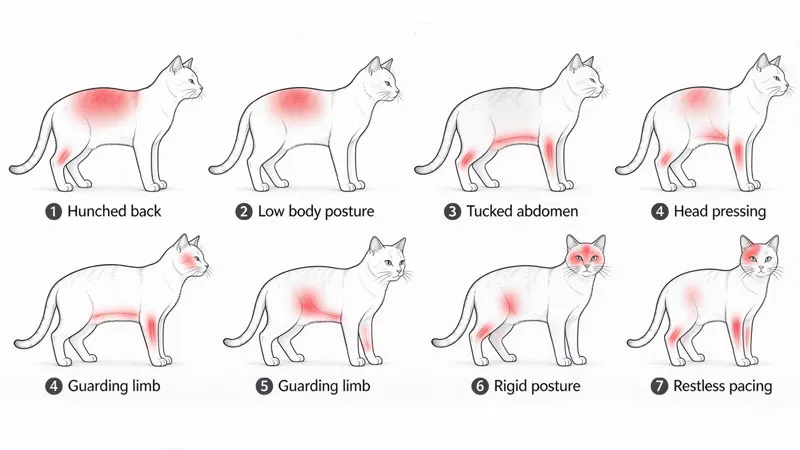
7 Cat Positions That Signal Pain
1. The Hunched, Arched Back
Head down, spine curved higher than normal. This shifts weight off sore hips or a painful abdomen.
2. The Tight Tucked Ball
Legs pulled fully underneath the body instead of the usual relaxed stretch. Cats do this to protect sore joints or a tender belly.
3. Compressed Loaf vs. Normal Loaf
This is the one owners miss most. A relaxed loaf looks round and soft. A pain-compressed version looks flattened and tense, with the head sitting noticeably lower.
Table 2: Normal Loaf vs. Painful Compressed Position
| Trait | Normal Loaf | Compressed Pain Position |
|---|---|---|
| Head height | Level with shoulders | Below shoulder line |
| Muscle tone | Relaxed | Visibly tense |
| Ear position | Neutral, upright | Flattened or sideways |
| Duration | Comes and goes | Held for long stretches |
4. Head Lowered Below Shoulder Line
A consistently low head position, even while sitting upright, points to discomfort — often abdominal or dental.
5. Flattened Body When Lying Down
Instead of curling comfortably, the cat lies unusually flat, almost pressed to the floor.
6. The “Prayer Position”
Front legs stretched forward, chest lowered, rear end raised. This one gets skipped in most guides, but vets associate it with abdominal pain, including pancreatitis.
7. Guarding a Specific Area
The cat angles their body to shield one limb, their belly, or their tail from contact — including from you.
Complete guide to feline arthritis care
Sleeping Positions That Signal Discomfort
Healthy cats sleep curled, relaxed, often in elevated warm spots. A cat in pain may:
- Struggle to settle into one position
- Seek low, warm spots like heating vents instead of their usual perch
- Sleep more hours overall, or wake frequently and shift positions
Restlessness at night is subtle but telling — it’s one of the first things veterinary behaviorists flag when owners describe a cat “just not acting right.”
The Feline Grimace Scale: A Clinical Scoring Tool
Researchers at Université de Montréal built the Feline Grimace Scale to score pain through facial features: ear position, eye squint, muzzle tension, whisker angle, and head position. A score of 4 out of 10 or higher typically signals a need for pain relief.
Quick Self-Assessment Checklist
Score one point for each that applies right now:
- Ears flattened or turned sideways
- Eyes squinted or unusually wide
- Head held below shoulder level
- Body in a tight, tucked position
- Reluctant to jump or climb
- Skipped a meal or litter box visit
- Hiding more than usual
3+ checked boxes: schedule a vet visit within 24–48 hours. 5+: call today.
Feline Grimace Scale clinical reference
Posture Differences by Age and Breed
Age and face shape change how pain shows up, and most guides skip this entirely.
Senior cats often blend pain posture with simple mobility loss, making it harder to separate the two — watch for sudden changes rather than slow decline alone.
Flat-faced breeds like Persians and Scottish Folds naturally have a more compressed facial structure, which can throw off Grimace Scale scoring. Compare against that individual cat’s normal expression, not a generic baseline.
Pain or Something Else? A Critical Distinction
Not every posture change means pain. Feline Cognitive Dysfunction Syndrome — the feline version of dementia — causes similar withdrawal and confusion in senior cats. Anxiety produces its own crouching and hiding behavior.
Table 3: Pain vs. Cognitive Decline vs. Anxiety
| Sign | Pain | Cognitive Decline | Anxiety |
|---|---|---|---|
| Posture | Guarding, hunched | Disoriented, wandering | Crouched, low to ground |
| Vocalization | Occasional cry | Yowling, especially at night | Rare unless cornered |
| Onset | Often sudden | Gradual, months+ | Tied to a trigger |
| Litter box | Avoided due to mobility | Forgotten location | Avoided when stressed |
When in doubt, a vet visit rules out the overlap fast.
When to See a Vet Immediately
Go same-day if your cat:
- Can’t walk or bear weight
- Is breathing rapidly or open-mouth panting
- Cries out constantly
- Can’t urinate (a male cat emergency)
If symptoms are milder but persist past 24 hours, book a standard appointment rather than waiting it out.
How to prepare for a veterinary pain assessment
Helping a Painful Cat at Home
Small changes reduce strain fast:
- Swap to a low-sided litter box
- Add a ramp or steps to favorite perches
- Raise food and water bowls
- Keep the house calm and predictable
Never give human pain medication. Ibuprofen and acetaminophen are toxic to cats even in small amounts. If your cat ingests either, call the ASPCA Animal Poison Control Center immediately — don’t wait for symptoms.
Emergency pet poisoning guidance
Frequently Asked Questions
Can a cat in pain still act normal sometimes?
Yes. Pain often comes and goes, especially early on, so a cat may seem fine for hours and then show clear signs later the same day.
What’s the most common pain position in senior cats?
The hunched back with a lowered head, usually tied to arthritis in the hips or spine.
How long should I wait before seeing a vet?
No more than 24 hours for mild signs. Immediately for severe signs like inability to walk or urinate.
Can stress cause the same positions as pain?
Yes, crouching and hiding overlap. The difference is duration and trigger — stress usually resolves once the trigger is gone; pain doesn’t.
Do cats in multi-cat homes show pain differently?
Often yes. A painful cat may get avoided or targeted by other cats, so watch for group dynamics shifting, not just the individual cat’s posture.
Disclaimer: This article is for informational purposes only and is not a substitute for professional veterinary diagnosis or treatment. Always consult a licensed veterinarian regarding your cat’s specific health condition, medication, and dosage.

