An elderly cat losing hair is rarely just “old age.” Bald patches, thinning fur, and constant licking usually point to something treatable. This guide breaks down eight real causes, shows you exactly when to call the vet, and tells you what treatment actually costs.
Is Hair Loss Normal for a Senior Cat?
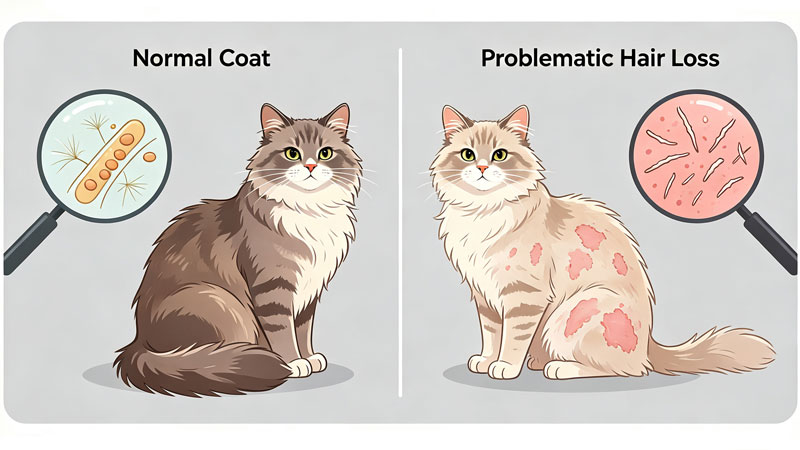
Short answer: no, not on its own. Cats shed year-round, especially with seasonal changes. That’s normal. What’s not normal is a bald patch, thinning skin, or fur that comes out in clumps when you pet your cat.
Age doesn’t cause hair follicles to stop working. Something else does — a hormone shift, a skin infection, chronic pain, or stress. Treat “senior” as a risk factor, not an explanation.
What Does the Pattern of Hair Loss Tell You?
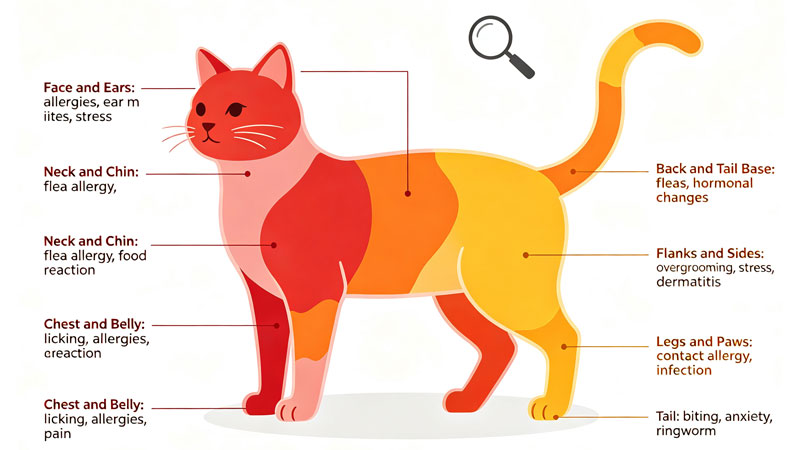
Where your cat is losing hair narrows down the cause faster than almost anything else. Vets use this as a first-pass diagnostic tool, and you can too.
Symmetrical Hair Loss on Both Sides of the Body
This pattern — especially on the belly, flanks, or inner thighs — usually points to something hormonal. Hyperthyroidism and, less commonly, Cushing’s disease top the list in senior cats.
Patchy, Irregular Bald Spots
Ring-shaped patches with a defined edge suggest ringworm. Random, moth-eaten patches often mean parasites or an allergic reaction.
Hair Loss With Red Skin, Scabs, or Sores
This combination almost always means infection, severe allergy, or a wound your cat keeps reopening by licking it.
8 Common Causes of Hair Loss in Elderly Cats
1. Hyperthyroidism
This is the most under-diagnosed cause in cats over 10. An overactive thyroid speeds up metabolism, and a thinning, greasy coat is often one of the earliest signs — before weight loss or increased appetite become obvious. [veterinary endocrinology research on feline hyperthyroidism prevalence]
2. Allergic Dermatitis
Food, fleas, dust mites, or pollen can all trigger allergic skin reactions. Cats respond to allergies with itchy skin, not sneezing, which means the fur takes the hit.
3. Fleas and Other Parasites
One flea bite can trigger weeks of scratching in a sensitive cat. Mites and lice cause similar damage, just harder to spot without a close skin check.
4. Fungal and Bacterial Infections
Ringworm and staph infections destroy the hair follicle directly. [identifying skin infections in cats]
5. Psychogenic Alopecia (Stress-Driven Overgrooming)
Older cats don’t handle change well. A new pet, a move, or even rearranged furniture can trigger compulsive licking as a coping mechanism. Grooming releases endorphins, so anxious cats groom to self-soothe — and end up bald in the process.
6. Chronic Pain and Arthritis
This one’s specific to senior cats. A cat with a sore hip or spine will often lick obsessively over the joint. If the bald spot lines up with a joint, pain is a likely trigger — not anxiety.
7. Medication Side Effects
Long-term steroid use, in particular, can thin the coat. Never stop a prescribed medication without talking to your vet first.
8. Rare Causes: Autoimmune Disease and Tumors
These are uncommon. Cancer-related hair loss almost always shows up alongside other symptoms — weight loss, lethargy, or a visible mass. A bald patch by itself is not a cancer red flag.
When Should You Actually Worry?
This is where most articles stop short. Not every case needs an emergency vet visit, and not every case can wait.
| Symptom Combination | Urgency Level | What To Do |
|---|---|---|
| Hair loss + lethargy, weight loss, or increased thirst | High | See a vet within 24–48 hours |
| Hair loss + open sores or bleeding skin | High | See a vet within 24–48 hours |
| Hair loss + mild itching, no other symptoms | Moderate | Schedule a routine visit this week |
| Localized shedding, no skin changes, cat acts normal | Low | Monitor for 5–7 days |
If your cat is eating, drinking, and behaving normally, and the only change is fur, you usually have a few days to schedule a visit rather than rush to an emergency clinic.
How Vets Diagnose the Cause
A vet starts with a physical exam and a history of your cat’s diet, medications, and recent changes at home. From there, testing depends on what the exam suggests.
| Diagnostic Test | What It Detects | Typical Cost (USD) | Turnaround |
|---|---|---|---|
| Skin scrape | Mites, parasites | $30–$60 | Same day |
| Wood’s lamp exam | Ringworm | $20–$40 | Same day |
| Blood panel | Thyroid, diabetes, organ function | $80–$200 | 1–3 days |
| Allergy testing | Environmental/food allergens | $200–$400 | 1–2 weeks |
| Diet trial | Food allergy | Cost of prescription diet | 8–12 weeks |
Costs vary by clinic and region, so treat these as ballpark figures, not quotes.
Treatment Options by Cause
Treatment always targets the underlying issue, not just the fur:
- Hormonal disorders — daily medication (methimazole for hyperthyroidism) or, in some cases, surgery
- Infections — topical or oral antifungals, antibiotics
- Parasites — vet-approved flea and mite treatments
- Stress-related licking — environmental changes, pheromone diffusers, occasionally anti-anxiety medication
- Pain-related grooming — pain management addressing the joint or injury itself, not just the skin
Skip over-the-counter remedies for anything beyond mild dry skin. Misdiagnosing the cause and guessing at treatment usually delays real recovery. [pet medication safety guidelines]
Nutrition’s Role in Coat Health
Diet won’t fix hormonal or infectious causes, but it supports recovery once the real problem is treated.
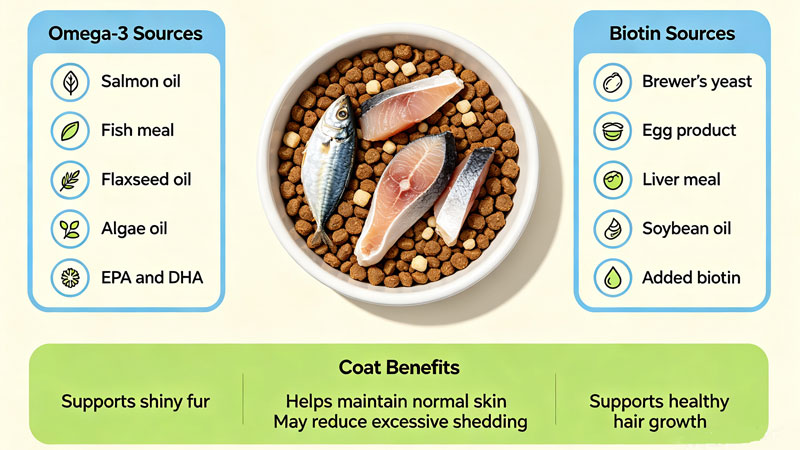
- Omega-3 fatty acids help maintain the skin’s barrier function and reduce inflammation
- Biotin supports keratin production, the protein that makes up hair
- Senior cat formulas built around skin and coat health can help, but they’re a supplement to treatment, not a replacement for it
How Long Until the Fur Grows Back?
Regrowth timelines depend entirely on the cause:
- Flea-related hair loss: 1–2 months after treatment starts
- Hormonal causes: 2–4 months once levels stabilize
- Chronic conditions (diabetes, ongoing stress): may require long-term management rather than full resolution
Set expectations early. A cat recovering from a severe flea infestation looks very different at week 2 versus week 8.
Preventing Hair Loss in Senior Cats
- Keep your cat on year-round flea and parasite prevention, even indoor cats
- Reduce household stressors — consistent routines matter more as cats age
- Brush your cat regularly and check the skin underneath, not just the surface fur
- Book annual bloodwork once your cat turns 10, even without symptoms
Early bloodwork catches thyroid and kidney issues before hair loss even starts.
FAQ: Elderly Cat Hair Loss
Is it normal for cats to lose more hair as they age?
No. Aging alone doesn’t cause bald patches. Increased shedding can happen, but hair loss down to the skin always has an underlying cause.
Can stress alone cause a cat to go bald?
Yes. Psychogenic alopecia from stress or anxiety is a recognized cause, especially in cats sensitive to household changes.
Should I worry if my cat is losing hair but acting completely normal?
Not urgently. If your cat is eating, drinking, and behaving normally, you typically have several days to schedule a routine vet visit rather than seek emergency care.
Is hair loss in cats a sign of cancer?
Rarely, and almost never on its own. Cancer-related hair loss is usually accompanied by other symptoms like weight loss, lumps, or lethargy.
How much does it cost to diagnose cat hair loss?
Basic tests like a skin scrape run $30–$60. A full blood panel typically costs $80–$200. Costs rise with specialized allergy testing.
Disclaimer: This article is for informational purposes only and does not replace professional veterinary advice. Always consult a licensed veterinarian for diagnosis and treatment of your cat’s specific condition.

