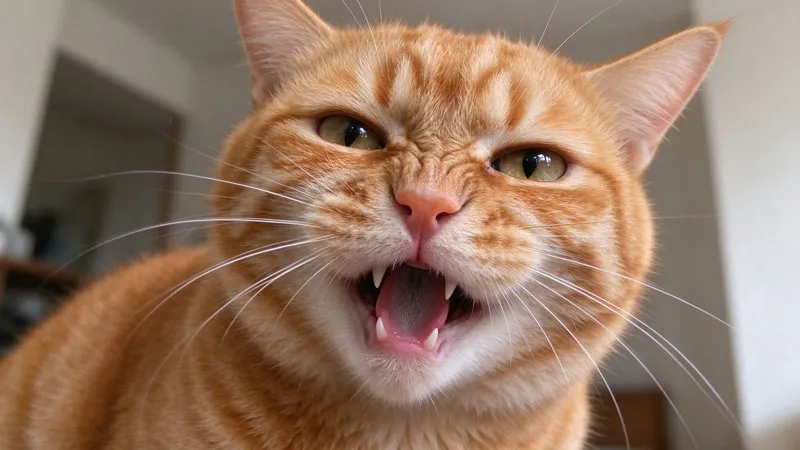
Wondering how do you make a cat sneeze without hurting them? Maybe your cat woke up with a stuffy nose, or you’re just curious after watching one too many cat videos. Either way, this isn’t as simple as tickling a whisker. Some methods are harmless. Others can injure your cat’s nasal lining or mask a real infection. Here’s what’s actually safe.
Why Would You Want to Make Your Cat Sneeze?
Most people land here for one of two reasons, and they need different answers.
Harmless Curiosity or Mild Congestion
Your cat wakes up with a little crust around the nose. Dry winter air is making them sniffly. You’re just curious what happens if you brush a feather near their nostrils. Fair enough — this is low-stakes territory, and the methods below will work fine.
A Misguided Instinct to “Sneeze Out” an Illness
This is where owners get into trouble. Some assume that triggering more sneezes will clear a respiratory infection faster, the way blowing your own nose helps a head cold. Cats don’t work that way. A sneeze reflex doesn’t flush out a virus sitting in the nasal tissue. If your cat already has thick discharge, watery eyes, or has been sneezing for more than a day or two, inducing more sneezes won’t fix anything — it just irritates already-inflamed tissue. Skip ahead to the red flags section below before trying anything.
Is It Safe to Make a Cat Sneeze?
Short answer: yes, in limited situations, and no, in others.
A cat’s nasal passages are lined with delicate mucous membranes packed with blood vessels. A gentle irritant — a feather, a soft tissue, a puff of clean air — triggers a normal, protective reflex. That’s harmless. But anything abrasive, chemical, or forceful can damage that lining or trigger genuine respiratory distress in a cat who’s already unwell.
learn how a cat’s respiratory system responds to irritants
Safe vs. Unsafe Methods at a Glance
| Method | Safety | Why |
|---|---|---|
| Soft tissue near the nostril | Safe | Mimics a natural airborne irritant |
| Vet-approved saline mist | Safe with guidance | Loosens mild congestion without harsh chemicals |
| Humidifier in the room | Safe | Indirect, gentle, no direct contact needed |
| Pepper or spice powder | Unsafe | Can burn or inflame sensitive nasal tissue |
| Essential oils (eucalyptus, tea tree, citrus) | Unsafe | Toxic to cats, can cause respiratory distress |
| Blowing air directly into the face | Unsafe | Startles the cat and does nothing therapeutic |
| Cotton swabs inserted into the nose | Unsafe | Real risk of injury to nasal lining |
How Do You Make a Cat Sneeze Safely? Step-by-Step
If your cat is otherwise healthy and you’re dealing with mild, occasional stuffiness, here’s what actually works.
Method 1: The Soft Tissue Tickle
Take a clean, soft tissue. Gently brush it near — not into — one nostril. Most cats will sneeze within seconds. Don’t repeat this more than once or twice; over-triggering the reflex just stresses your cat out for no benefit.
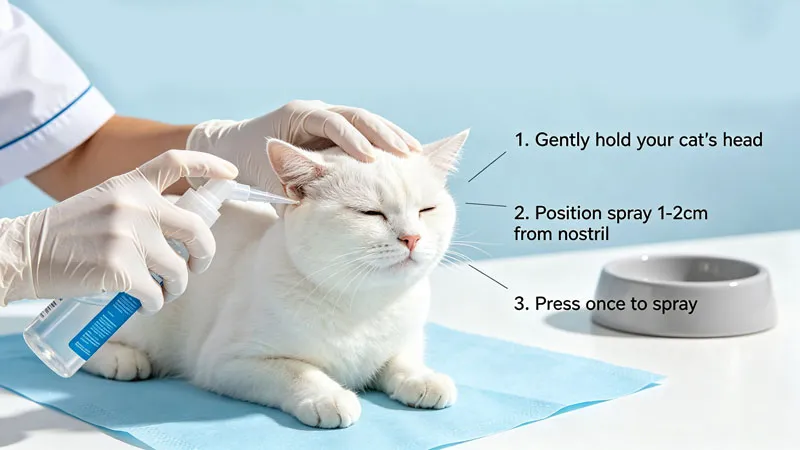
Method 2: Vet-Approved Saline Spray
A pediatric saline spray, used under your vet’s guidance, can loosen mild congestion and naturally prompt a sneeze. Dosing and application differ from human use, so confirm the right approach with your vet before trying this at home.
Method 3: Raise the Humidity
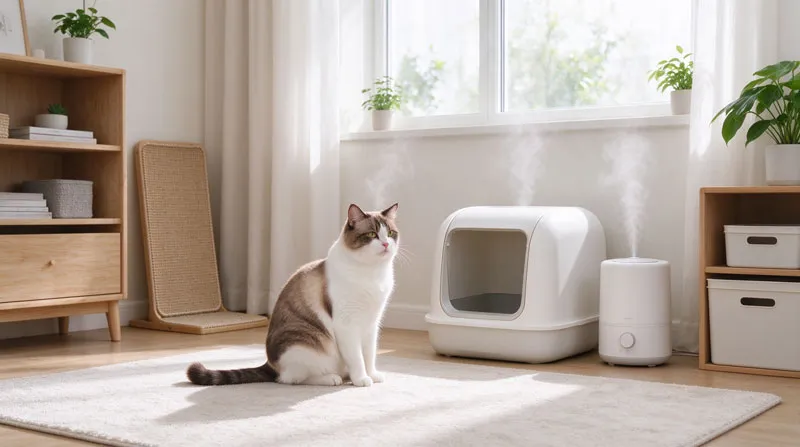
This one doesn’t force a sneeze directly, but it helps a stuffy cat clear their own nose more comfortably. Run a humidifier in the room where your cat sleeps. Moist air loosens mucus and reduces inflammation in the nasal passages.
What Not to Do — Full Stop
- Don’t use pepper, cayenne, or any spice powder near your cat’s face.
- Don’t diffuse or apply essential oils anywhere your cat breathes.
- Don’t blow directly into your cat’s face.
- Don’t insert anything into the nostril itself.
- Don’t repeat any method more than once or twice per session.
Cat Sneezing vs. Reverse Sneezing — Know the Difference
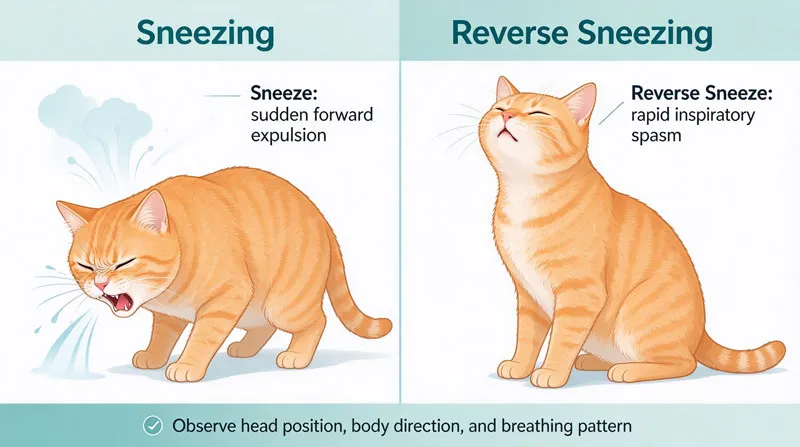
This mix-up trips up a lot of owners, and it matters. A regular sneeze pushes air out through the nose, fast and sharp. Reverse sneezing does the opposite: your cat pulls air in through the nose in loud, honking snorts, often with their neck stretched out. It looks alarming, but it’s usually harmless and self-resolving within seconds.
Quick Comparison
| Trait | Sneeze | Reverse Sneeze |
|---|---|---|
| Air direction | Out through nose | In through nose |
| Sound | Sharp, short | Loud, honking snort |
| Body posture | Head dips forward | Neck extended, still |
| Typical cause | Irritant, congestion | Nasal spasm, excitement |
If you’re not sure which one you’re seeing, film it. Vets diagnose these very differently, and a video saves everyone guesswork.
When You Shouldn’t Try to Induce Sneezing — Call the Vet Instead
Some situations aren’t home-remedy territory. Skip the tissue trick and book an appointment if you notice any of the following.
Red Flags That Mean Something Else Is Going On
- Yellow or green nasal discharge
- Watery or swollen eyes
- Loss of appetite or noticeable weight loss
- Lethargy or hiding more than usual
- Sneezing that continues beyond two or three days
- Labored or open-mouth breathing
- Any blood in the discharge
Kittens and senior cats deserve extra caution here. A kitten’s immune system hasn’t fully matured, so a mild-looking infection can escalate fast. Senior cats are more prone to dental disease and nasal masses, both of which can present as ordinary sneezing at first.
Chronic Sneezing Isn’t a Home-Remedy Problem
If your cat sneezes on and off for weeks or months with no clear pattern, you’re likely looking at chronic rhinitis — ongoing inflammation that persists after an initial infection clears. No amount of saline spray or humidity fixes this. It needs veterinary management, sometimes long-term.
Feline upper respiratory disease guidelines
How Vets Actually Diagnose Frequent Sneezing
A one-off sneeze needs no workup. Frequent or worsening sneezing does.
The Basics: Physical Exam
Your vet checks the ears, nose, throat, and mouth first. Dental disease is a surprisingly common hidden cause — the roots of a cat’s upper teeth sit close to the sinus cavity, and an infected tooth can trigger sneezing that looks purely respiratory.
When Imaging Is Needed
For unclear or persistent cases, a CT scan lets vets examine the nasal passages for masses, foreign material, or structural changes. A rhinoscopy — a small camera inserted under sedation — can find and sometimes remove the problem directly, and collect a biopsy if a mass turns up.
Costs vary widely by region and clinic, but advanced diagnostics like these typically run several hundred to over a thousand dollars. Ask your vet upfront and check whether your pet insurance covers imaging and sedation before committing.
Compare pet insurance plans that cover diagnostic imaging
A Note on L-Lysine and Other Supplements
L-lysine has been marketed for years as a way to manage feline herpesvirus, the leading cause of recurring upper respiratory symptoms in cats. The theory: lysine competes with arginine, an amino acid the virus needs to replicate.
In practice, recent veterinary research has cast real doubt on how well it works. Several studies have found no consistent reduction in symptoms or flare-ups compared to cats given no supplement at all. That doesn’t mean it’s harmful — it’s generally safe — but don’t treat it as a guaranteed fix. Talk to your vet about whether it’s worth adding to your cat’s routine, rather than assuming it from marketing copy.
Building a Sneeze-Friendly Home
Prevention beats any home remedy.
Air Quality and Litter Habits
Dust and ammonia buildup from a dirty litter box are two of the most common everyday irritants. Vacuum regularly, wash bedding often, and switch to a low-dust, unscented litter. A self-cleaning litter box cuts down on ammonia exposure since waste doesn’t sit around building up fumes.
Multi-Cat Households Need Extra Care
If one cat is sneezing from a suspected infection, isolate them from your other cats for at least ten to fourteen days, or until your vet clears them. Wash your hands and change clothes between handling the sick cat and the healthy ones. Any new cat entering the household should go through a similar quarantine period before mingling, since upper respiratory viruses spread easily in shared spaces.
Frequently Asked Questions
Q: How do you make a cat sneeze at home safely?
A gentle soft tissue near the nostril, or a vet-approved saline mist, are the two safest options. Avoid anything chemical or abrasive.
Q: Can you make a cat sneeze to help clear a stuffy nose?
Mild stuffiness can improve with a light sneeze trigger plus a humidifier. Persistent congestion needs a vet visit, not repeated home attempts.
Q: What’s the difference between a cat sneezing and reverse sneezing?
A sneeze pushes air out; reverse sneezing pulls air in with a loud snort. Reverse sneezing is usually harmless and passes within seconds.
Q: Why does my cat sneeze suddenly with no other symptoms?
Usually a mild irritant like dust or pollen. If it stays a one-off event with no discharge or lethargy, it’s rarely a concern.
Q: Should I worry if my cat sneezes once and then acts totally normal?
No. Occasional, isolated sneezing with normal eating, energy, and behavior is not a red flag.
Disclaimer: This article is for general informational purposes only and is not a substitute for professional veterinary advice, diagnosis, or treatment. Always consult a licensed veterinarian regarding your cat’s specific health condition before trying any method described here.

