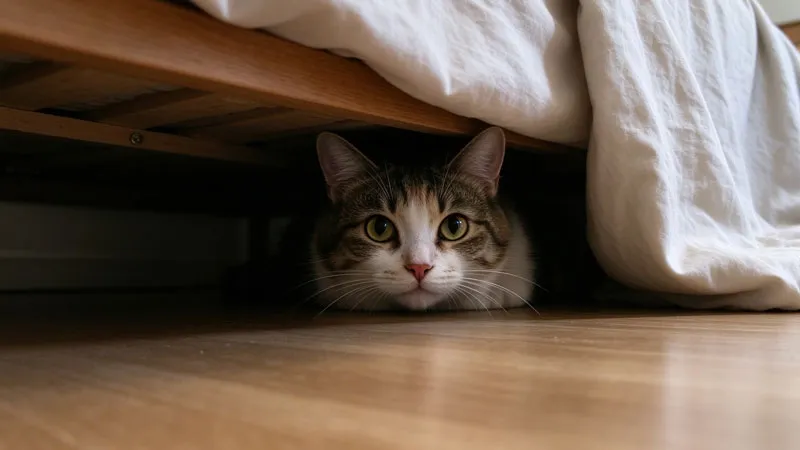
You’ve checked under the bed. You’ve called their name a dozen times. Nothing. Learning how to lure a cat out of hiding starts with one uncomfortable truth: forcing the issue almost always backfires. Cats hide for reasons that make sense to them, even when they don’t make sense to you. This guide breaks down what’s actually going on, when it’s urgent, and what to do — step by step, scenario by scenario.
Why Cats Hide in the First Place
A cat that disappears isn’t being dramatic. It’s running an old survival program.
In the wild, cats are both hunter and hunted. Hiding is how they avoid becoming someone else’s meal while they rest, recover, or assess a threat. Your living room doesn’t have predators, but your cat’s nervous system hasn’t gotten that memo.
It’s Instinct, Not Defiance
Small, enclosed spaces feel safe because they limit exposure. One entry point. Full visibility of the room. That’s the appeal of a closet, a box, or the space behind the couch. This isn’t a behavior problem. It’s a design feature.
Environmental Triggers
New furniture, a house guest, construction noise next door, a baby who cries at odd hours — any disruption to a predictable environment can send a cat into hiding mode. The trigger doesn’t have to be dramatic. Cats notice small shifts humans miss entirely.
Past Trauma in Rescue Cats
Cats with a history of neglect, shelter stays, or multiple rehoming events often carry that history into a new home. A rescue cat hiding for the first few weeks isn’t rejecting you. It’s running a threat assessment based on past experience.
Pain, Illness, or Injury
This is the cause owners miss most often. Sick or injured cats hide because vulnerability gets them killed in the wild. A cat that suddenly starts hiding — with no change in environment, no new pet, no obvious trigger — is telling you something’s physically wrong, not emotionally off.
Feline hiding as an instinctual stress response
Is This an Emergency? Check the Signs First
Before you start luring your cat out, figure out whether you’re dealing with normal caution or a medical situation. This step gets skipped constantly, and it shouldn’t.
Red Flags That Need a Vet, Today
- No food or water for more than 24 hours
- Labored or rapid breathing
- Visible limping, dragging a limb, or reluctance to move
- Repeated vomiting or diarrhea
- Straining in the litter box with little or no output
- Sudden disorientation or unresponsiveness
Any one of these, paired with hiding, moves this from “wait it out” to “call the vet now.”
What’s Safe to Monitor for a Day
Occasional hiding after a loud thunderstorm, a new piece of furniture, or a one-off stressful event usually resolves on its own within 24 hours. Keep food, water, and a litter box accessible, and check in without forcing contact.
Kittens, Seniors, and Post-Surgical Cats Need Faster Action
A healthy adult cat can go a day without eating and be fine. A kitten, a senior cat, or a cat recovering from surgery cannot. Their metabolic reserves are smaller, and dehydration or hypoglycemia sets in faster. If a cat in one of these groups is hiding and skipping meals, don’t wait the full 24 hours — call your vet sooner.

How to Lure a Cat Out of Hiding, Step by Step
Once you’ve ruled out an emergency, here’s what actually works.
Lower Your Energy First
Cats read body language before they read anything else. Crouch down instead of looming. Move slowly. Speak in a low, even voice. A slow blink — closing your eyes gently and reopening them — signals non-threat in feline body language. This single habit does more than most owners expect.
Let Scent Do the Work
Food is the most reliable lure you have. Wet food or a strong-smelling treat like tuna works better than dry kibble. Place it a few feet from the hiding spot, not directly in front of it — cats are wary of eating somewhere they can’t see the room. Step back and give them space to approach on their own terms.
Use Sound Strategically
Shake a treat container. Tap a food bowl. Use the same sounds tied to feeding time. Cats associate specific noises with specific outcomes, and a familiar sound is far less threatening than your voice calling their name for the twentieth time.
Trigger Play Drive, Don’t Force It
A wand toy or a slow-moving feather can tap into hunting instinct even when a cat is stressed. Keep movements slow and low to the ground. Sudden, fast motion reads as a threat, not an invitation to play.
Give Them an Exit They Control
This gets missed constantly: cats need a clear, unobstructed path out of their hiding spot. If the only way out puts them closer to you, a loud appliance, or another pet, they’ll stay put. Clear the path first. Then wait.
How to reduce stress in multi-cat households
What Not to Do When Your Cat Is Hiding
A few common instincts make hiding worse, not better.
- Don’t reach in and pull them out. This can trigger a defensive bite or scratch, and it teaches your cat that hiding spots aren’t even safe from you.
- Don’t shine a flashlight directly at them. Direct light in a dark space reads as a threat, not a search tool.
- Don’t corner them or block every exit. A trapped animal has one option left: fight.
- Don’t keep calling loudly on repeat. Escalating volume signals urgency and stress, which your cat picks up on immediately.
Forcing a hiding cat into the open — sometimes called flooding in behavior science — tends to extend recovery time, not shorten it. Patience is the faster route, even when it doesn’t feel that way.
Special Situations That Need a Different Approach
New Cats and Rescues: How Long Is Normal?
Shelter and rescue behaviorists often reference a “3-3-3” pattern: roughly 3 days to decompress, 3 weeks to settle into a routine, and 3 months to build real trust. A newly adopted cat hiding for the first several days is on schedule, not broken.
Indoor Cats vs. Cats That Got Outside
A cat hiding under your own bed is a different situation than a cat that slipped out the door. An escaped cat is operating on pure survival instinct in unfamiliar territory and typically won’t come to you, even if you call. In that case, leave food out overnight near where they were last seen, and consider a humane trap if days pass without success.
Multi-Cat Homes: Hiding as a Social Signal
If one cat in a multi-cat household hides consistently while others don’t, it’s often a sign of social tension, not a home-wide stressor. Watch for resource guarding around food, litter boxes, or favored resting spots.
Calming Aids: What’s Worth Trying
| Aid | How It Works | Best For | Note |
|---|---|---|---|
| Pheromone diffusers | Mimics feline facial pheromones to signal a safe space | Ongoing household stress | Takes days to weeks for full effect |
| L-tryptophan supplements | Precursor to serotonin, supports calm mood | Mild, situational anxiety | Check dosing with your vet first |
| Puzzle feeders | Redirects nervous energy into a task | Boredom-driven hiding | Not a fix for medical or trauma-based hiding |
| Vertical space (cat trees) | Gives a sense of control and observation | Multi-cat homes, general anxiety | Long-term prevention tool |
None of these replace a vet visit if hiding is sudden and paired with any red-flag symptom listed above. Supplements and pheromones support a calm environment — they don’t treat pain or illness.
Safe use of calming supplements in cats

FAQ: Common Questions About Cats Hiding
Why is my cat hiding and shaking?
Shaking paired with hiding usually points to fear, pain, or cold. If it doesn’t resolve within an hour or comes with other symptoms, contact your vet.
How long can a cat safely hide without eating?
A healthy adult cat can typically go 24 hours without serious risk. Kittens, seniors, and cats with existing health conditions need attention sooner — closer to 12 hours.
Will my cat come out of hiding on its own?
In most non-medical cases, yes. Given a calm environment, food, and time, cats typically re-emerge within a day or two on their own schedule.
Is it normal for a new cat to hide for a week?
Yes, especially for rescues. A full week of intermittent hiding fits within the normal adjustment window before things start to stabilize.
Should I use a flashlight to search for my cat at night?
Use a dim light source and avoid pointing it directly at your cat’s eyes. A soft light to locate them is fine — a direct beam will likely push them further back.
What to do when your cat won’t eat
Final Thoughts
Most hiding resolves with patience, a calm approach, and the right lure. The exceptions — sudden onset, missed meals past 24 hours, visible pain — are the cases where waiting costs you time you don’t have. Know the difference, and you’ll handle either situation with confidence instead of guesswork.
Disclaimer: This article is for general informational purposes only and is not a substitute for professional veterinary advice, diagnosis, or treatment. Always consult a licensed veterinarian regarding your cat’s specific health and behavior concerns.

