Wondering how to stop a cat from climbing a tree before it gets stuck up there again? You’re not alone. Every fall, shelters and tree services field calls from panicked owners. This guide skips the myths and gives you what actually works — plus the safety risks most articles never mention.
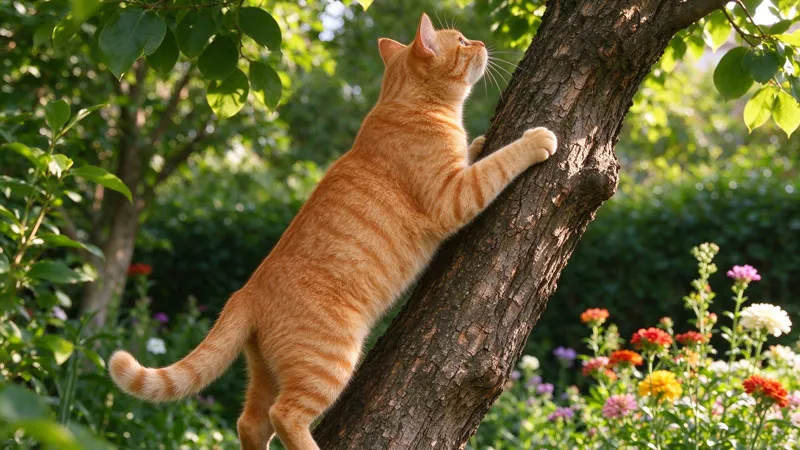
Why Do Cats Climb Trees in the First Place?
Before you stop the behavior, understand it. Climbing isn’t naughtiness. It’s wiring.
Predatory Drive and the Hunting Sequence
Cats hunt in a fixed sequence: stalk, chase, pounce, bite. A squirrel bolting up a trunk triggers that sequence instantly. Your cat isn’t thinking about the way down — it’s locked onto the chase. That tunnel vision is exactly why so many cats end up stranded.
Territorial and Safety Instincts
Height means safety in a cat’s brain. A threat on the ground — a dog, a stranger, a loud noise — sends cats straight up. It’s an old survival reflex, and it doesn’t disappear just because your cat lives indoors nine months of the year.
The Anatomy Problem — Why Going Up Is Easy But Coming Down Isn’t
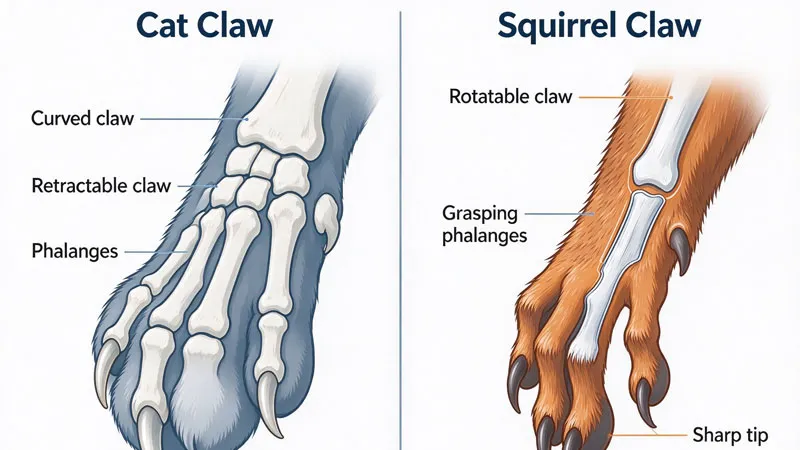
Cat claws curve backward. Great for climbing up, terrible for climbing down face-first. Squirrels can rotate their rear ankles 180 degrees; cats can’t. So a cat that goes up fast often has no safe way to descend the same way.
Breed and Age Differences (Often Overlooked)
Not every cat climbs the same amount. Bengals and Abyssinians are bred for high energy and vertical exploration. Ragdolls and British Shorthairs climb far less. Kittens climb to explore; senior cats climbing suddenly, out of nowhere, deserves a second look — more on that below.
Is It Actually a Problem? When to Worry vs. When to Let It Be
Not every trip up a tree needs intervention. Cats are built for this.
No action needed if:
- Your cat climbs, explores, and comes down within minutes on their own
- It’s occasional, not daily
- There’s no visible distress or crying
Red flags that need attention:
- Your cat has been stuck more than a few hours
- A senior cat suddenly starts climbing after years of staying grounded — this can signal joint pain driving restlessness, or in rarer cases, cognitive changes
- Climbing is paired with other behavior shifts: hiding, appetite loss, or vocalizing
Sgns of feline cognitive decline in senior cats
How to Safely Get a Cat Down From a Tree
If your cat is stuck right now, here’s the order to try things in.
Step 1: Stay Calm and Give Them Time
Most cats get themselves down within a few hours. Shouting or crowding the tree adds stress and makes them climb higher, not lower.
Step 2: Create a Safe Descent Route
Stack sturdy furniture near the trunk, or prop a secure ladder against it. Cats will often use a staged route down even if they won’t jump the full height.
Step 3: Use Food as an Incentive
Warm, strong-smelling wet food works better than dry treats. Set it at the base and step back — cats respond to smell more than sight here.
Step 4: Know Who to Call
This is where most guides get it wrong. In the U.S., fire departments generally do not respond to cats stuck in trees unless there’s an immediate public safety issue. Your first call should be a local tree service or an animal control officer.
guidance on cats stuck in trees and emergency response protocols
What NOT to Do
- Don’t spray your cat with a hose — it teaches them to fear you, not the tree
- Don’t yell or bang on the trunk
- Don’t pull or grab at a scared cat; bites and scratches happen fast
How to Stop a Cat From Climbing Trees in the Future
Once your cat is down safely, focus on prevention. Here’s how the main methods actually compare.
Physical Barriers: Trunk Guards and Smooth Materials
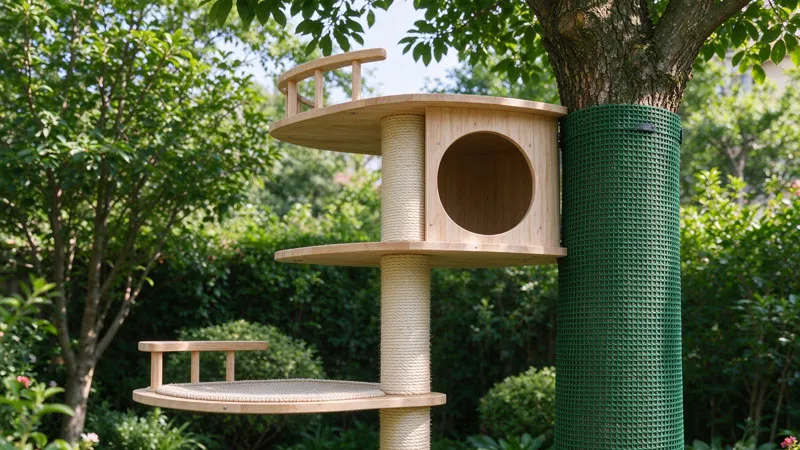
Wrapping the lower trunk in smooth plastic sheeting or a commercial tree guard removes the grip cats need. This is the single most reliable long-term fix for a specific tree.
Scent and Taste Deterrents — With a Safety Correction
Citrus and rosemary sprays are common advice. Here’s what most cat blogs skip: concentrated essential oils, including citrus and rosemary oil, can be toxic to cats. Cats lack a liver enzyme (glucuronyl transferase) needed to safely break down many plant compounds found in essential oils. Diluted, food-grade citrus peel is fine. Pure essential oil concentrate is not.
Essential oil toxicity risks in cats
Motion-Activated Deterrent Devices
Motion-triggered air or sound devices startle cats without touching them. They work well on repeat offenders climbing the same spot daily.
Redirect With an Approved Climbing Alternative
Give your cat a legitimate outlet. A tall cat tree or outdoor catio satisfies the same urge that sends them up your maple tree.
Comparison Table: Prevention Methods
| Method | Effectiveness | Safety | Cost | Best For |
|---|---|---|---|---|
| Trunk guard | High | Safe | Medium | One specific tree, long term |
| Diluted scent spray | Medium | Use with caution | Low | Short-term deterrent |
| Motion-activated device | High | Safe | Medium-High | Repeat climbers |
| Cat tree alternative | High (long-term) | Safe | Medium-High | Solving root cause |
Product Considerations: What to Look for in a Deterrent
If you’re buying a trunk guard or motion device, check three things: weatherproof materials for outdoor use, a mounting system that won’t damage the tree bark, and a battery life rated for at least a full season if it’s electronic.
Best outdoor cat trees for climbing redirection
Special Considerations by Life Stage
Kittens
Climbing is developmental, not a behavior problem. Supervise, don’t punish.
Senior Cats
A sudden increase in climbing after years of calm can point to arthritis-driven restlessness or early cognitive change. Worth a vet visit, not just a deterrent spray.
Multi-Cat Households
Climbing can be territorial. If one cat dominates ground-level space, another may head for the trees to avoid conflict. Adding vertical space indoors often reduces this.
Frequently Asked Questions
Is it normal for cats to climb trees every day?
Yes, for high-energy breeds and young cats. Daily climbing without distress isn’t a red flag on its own.
How long can a cat safely stay stuck in a tree?
Most cats manage overnight without harm. Beyond 24 hours, contact a tree service or animal control.
Will my cat come down on its own eventually?
Usually, yes. Give them space and time before intervening.
What smells do cats hate that are actually safe to use?
Diluted citrus peel and white vinegar are safer than concentrated essential oils, which carry toxicity risk for cats.
Should I call animal control or a tree surgeon first?
Try a tree service first for a physically stuck cat. Animal control is better suited for aggressive, injured, or unowned cats.
Key Takeaways
Climbing is instinct, not defiance. The goal isn’t to eliminate it — it’s to redirect it somewhere safe and keep your cat off the trees that pose real risk. Start with a trunk guard on problem trees, add a legitimate climbing outlet, and skip the essential oil sprays unless properly diluted.
Disclaimer: This article is for general informational purposes only and does not replace professional veterinary or animal behavior advice. If your cat shows sudden behavior changes, signs of distress, or remains stuck for an extended period, consult a licensed veterinarian or local animal control service.

