Preventing static in cat coat starts with understanding what’s really happening in your home, not just your cat’s fur. That crackle when you pet her isn’t random — it’s a signal your indoor air, grooming routine, or bedding needs a fix. Here’s what actually works, backed by real numbers instead of guesswork.
What Causes Static in Your Cat’s Coat
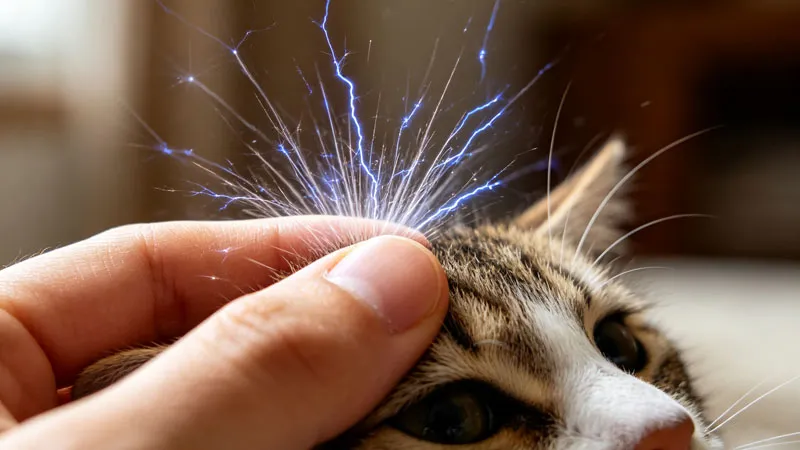
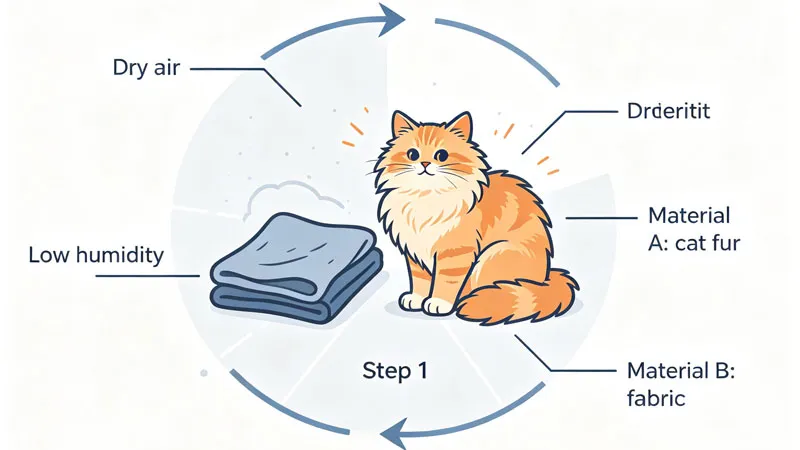
Static happens when two surfaces rub together and swap electrons. Scientists call this the triboelectric effect. Your cat’s fur, your hands, synthetic fabric — all of it can trade charge on contact.
Why Dry Air Makes It Worse
Water molecules in humid air carry charge away as fast as it builds. Strip that moisture out, and charge has nowhere to go. It sits on your cat’s coat until you touch her — then it jumps.
Why Cats Build Up More Charge Than You’d Expect
A cat’s coat has two layers: a dense undercoat and coarser guard hairs. That extra surface area and layering trap more static than a single layer of human hair does. Long-haired breeds like Maine Coons and Persians carry even more surface area, so they shock more often than short-haired cats.
Is Cat Static Electricity Actually Harmful?
Most of the time, no. But repeated shocks aren’t nothing either, and this is where most articles stop short.
Behavioral Signs Your Cat Is Genuinely Bothered
Watch for the difference between mild annoyance and real distress:
- Mild: an occasional flinch, a quick ear twitch, no lasting change in behavior
- Concerning: flinching before you even make contact, hiding when you approach with a brush, sudden aggression during petting sessions that didn’t exist before
A cat that starts avoiding touch altogether may be building a negative association with human contact — not just reacting to one zap.
When Static Signals a Bigger Problem
Static on its own rarely needs a vet visit. But static combined with any of these does:
- Flaky, dandruff-heavy skin lasting more than two weeks
- Bald patches or thinning fur in specific spots
- Fur that stays dull and brittle even after diet changes
- Excessive scratching that breaks skin
If you see these alongside frequent shocks, the static is a symptom of dry, unhealthy skin — not the root problem itself. A vet can rule out allergies, thyroid issues, or parasites that dry out the coat.
signs of skin problems in cats worth watching for
Fixing the Root Causes, One by One
| Cause | Why It Happens | Fix |
|---|---|---|
| Dry indoor air | Humidity below 30% can’t dissipate charge | Run a humidifier, keep RH between 40-50% |
| Over-bathing | Strips natural sebum that conducts charge away | Bathe cats only when visibly dirty or vet-directed |
| Synthetic bedding | Polyester and fleece hold charge | Swap to cotton or wool blankets |
| Over-brushing | Friction builds charge with every stroke | Mist fur lightly before brushing, don’t overdo sessions |
| Age and coat condition | Older, brittle fur holds static more easily | Ask your vet about coat-support supplements |
The American Veterinary Medical Association notes that low indoor humidity during winter months is a common driver of dry skin and coat issues in pets — which lines up directly with why static spikes every winter.
AVMA guidance on winter pet skin care
Your Step-by-Step Action Plan
Step 1: Fix the Humidity First
This is the single biggest lever you can pull. Aim for 40-50% relative humidity, checked with a $10 hygrometer.
| Humidifier Type | Pros | Cons | Best For |
|---|---|---|---|
| Ultrasonic | Quiet, low energy use | Needs distilled water to avoid white dust | Bedrooms, small spaces |
| Evaporative | Works with tap water | Needs regular filter cleaning | Larger rooms, budget setups |
| Warm-mist | Kills some bacteria | Burn risk around curious cats | Not recommended for cat households |
Step 2: Pick the Right Grooming Tool
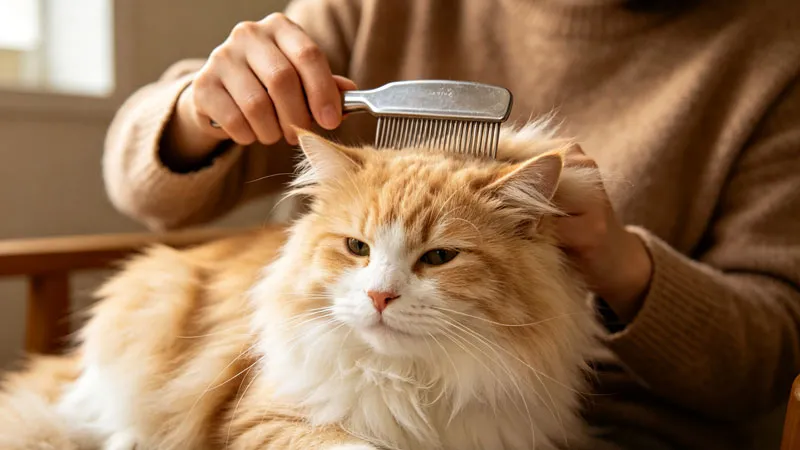
Metal combs discharge static as they pass through fur. Rubber and silicone brushes create friction and can actually add charge if used dry. Always mist the coat lightly first — water, not a heavy spray.
Step 3: Feed for Coat Health
Wet food runs 70-80% moisture, compared to roughly 10% in dry kibble. That difference shows up in skin hydration within weeks. Add omega-3 fatty acids from fish oil or sardines — most veterinary nutrition sources recommend an omega-6 to omega-3 ratio between 5:1 and 10:1 for skin barrier support.
Best wet cat food options for skin and coat health
Step 4: Adjust the Environment
Swap synthetic pet beds for cotton or wool. Go barefoot at home during dry months — shoe soles pick up charge you then pass to your cat. A grounding mat under your cat’s favorite spot can also bleed off static safely.
What Not to Do: Common Mistakes That Backfire
| Product | Risk |
|---|---|
| Dryer sheets | Contain cationic detergents toxic if licked off fur |
| Human shampoo | Wrong pH strips protective oils, worsens dryness |
| Essential oils (tea tree, citrus, eucalyptus) | Cats can’t metabolize phenols — even small amounts cause liver damage |
Never improvise with human anti-static products on a cat’s coat. The Pet Poison Helpline lists several essential oils and cationic detergents among the most common sources of at-home pet poisoning calls each winter.
Pet Poison Helpline list of toxic household products
Cat-safe grooming products worth trying
Myth vs. Fact
Myth: Thicker fur always means more static.
Fact: Coat density matters less than moisture level. A well-hydrated long-haired cat can shock less than a dry short-haired one.
Myth: Drinking more water alone eliminates static.
Fact: Hydration helps skin health over weeks, but it won’t fix a 25% humidity living room overnight.
FAQ
Why does my cat’s fur crackle when I pet her?
Dry air removes moisture that normally carries charge away, so it builds up in the coat until your touch releases it as a spark.
Can static electricity hurt my cat’s heart or nervous system?
No. Static shocks from petting are far too weak to affect internal organs or the nervous system.
Are kittens more prone to static than adult cats?
Not inherently — but kittens groom themselves less effectively, so their coats can stay drier and shock more until they mature.
Is it safe to use anti-static spray on a cat with sensitive skin?
Only if it’s labeled specifically for cats. Fragranced sprays made for fabric or hair can irritate feline skin and aren’t formulated for their pH.
How fast will these fixes actually work?
Humidity changes show results within a day or two. Diet-related coat improvements typically take 3-4 weeks to show.
Key Takeaways Checklist
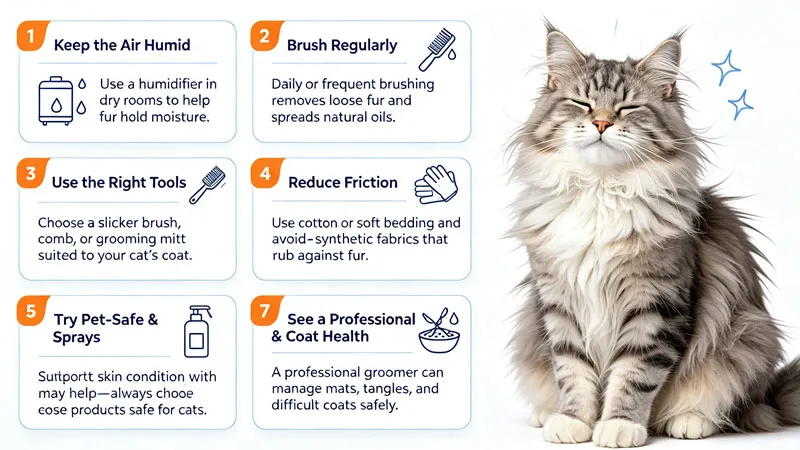
- Keep indoor humidity at 40-50%
- Bathe only when needed, never on a routine
- Use a metal comb, mist before brushing
- Feed wet food with omega-3 support
- Swap synthetic bedding for cotton or wool
- Skip dryer sheets, human shampoo, and essential oils entirely
- See a vet if static comes with flaking, bald spots, or broken skin
Disclaimer: This article is for informational purposes only and does not replace professional veterinary advice. Always consult a licensed veterinarian regarding your cat’s specific health, skin, or coat concerns.

