Learning how to clean a cat bed properly is about more than smell — it’s the one surface your cat touches skin-to-fabric for 12+ hours a day. Get the detergent or the drying step wrong, and you can trade odor for a skin reaction. Here’s exactly how to do it safely, step by step.
Why Cleaning Your Cat’s Bed Matters More Than Odor Control
A cat bed isn’t just fabric. It’s a daily collection point for dead skin cells, saliva, loose fur, and — if your cat goes outdoors — flea eggs and larvae. None of that is visible until it’s a problem.
What Actually Builds Up in the Fabric
Dander is the main culprit. It’s microscopic, it sheds constantly, and it settles into fibers the same way dust settles into carpet. Add saliva from grooming and you get a surface that stays slightly damp, which is exactly what bacteria and mold need to grow.
The Real Health Risk — For You and Your Cat
Pet dander is one of the most common indoor allergens in U.S. households, and it doesn’t stay on the bed — it becomes airborne every time your cat jumps on or off. pet dander as a common household allergen For cats with skin sensitivities, a dirty bed can also trigger irritation or secondary infections around the belly and paws, where contact time is longest.
Signs the Bed Needs Washing Now
- Visible staining or matted fur clumps
- A sour or ammonia-like smell you notice from across the room
- Your cat suddenly avoiding the bed
- Any sign of fleas — small dark specks that turn reddish on a wet paper towel
How Often Should You Wash a Cat Bed?
There’s no single right answer here, and any article that gives you one flat number is oversimplifying. Frequency depends on your cat’s lifestyle, not a calendar.
Cleaning Frequency by Cat Lifestyle
| Cat Type / Situation | Recommended Frequency | Why |
|---|---|---|
| Indoor-only, healthy adult | Every 2–3 weeks | Standard dander and oil buildup |
| Outdoor access | Weekly | Dirt, parasites, plant debris |
| Senior cat or incontinence | 2–3x per week | Urine breakdown produces ammonia fast |
| Multi-cat household | Weekly | Shared bedding spreads parasites and bacteria |
| Kitten under 6 months | Weekly | Immune system is still developing |
| Post-surgery recovery | Daily to every other day | Open incisions are infection-prone |
If your cat falls into more than one category — say, a senior cat who also goes outside — default to the shorter interval.
What You’ll Need Before You Start
Safe Cleaning Supplies Checklist
- Mesh laundry bag
- Fragrance-free, dye-free pet-safe detergent
- Soft-bristle brush or rubber grooming glove
- Handheld vacuum
- White vinegar and baking soda
- Enzymatic cleaner (for urine stains specifically)
Products to Never Use Near a Cat Bed
⚠️ Essential oils. Tea tree, citrus, and eucalyptus oils are commonly marketed as “natural” cleaners, but they’re toxic to cats even in small residual amounts. Cats lack the liver enzyme needed to break these compounds down efficiently.
⚠️ Bleach. Bleach reacts with ammonia — and cat urine already contains ammonia. Mixing the two produces toxic fumes, even in a well-ventilated laundry room.
⚠️ Fragranced fabric softener. A cat’s sense of smell is roughly 14 times stronger than a human’s. Heavy fragrance isn’t just unnecessary — it can make a cat avoid the bed entirely.
For a full list of household products that pose a poisoning risk to cats, the list of toxic household products for pets is worth bookmarking.
How to Clean a Cat Bed Step by Step
Step 1: Remove Hair and Debris First
Vacuum the bed or run it through a no-heat dryer cycle for 10 minutes before washing. Skipping this step is the number one reason washing machines clog — loose fur binds with detergent residue and clumps in the drain filter.
Step 2: Pre-Treat Stains and Odor
This is where most guides stop short. Regular detergent doesn’t fully break down uric acid crystals — the compound responsible for that lingering “cat pee smell” that comes back even after a normal wash. An enzymatic cleaner actually digests the crystals instead of just masking them. Spray, let it sit for 10–15 minutes, then proceed to washing.
Step 3: Machine Wash Covers and Washable Mattresses
Use cold water on a gentle cycle. Cold water protects both the fabric and any foam padding underneath from warping. Never combine the bed with your own laundry — cross-contamination goes both ways.
Step 4: Hand Wash Anything Not Machine-Safe
Soak in cold water with a small amount of pet-safe detergent, agitate by hand, then rinse until the water runs completely clear. Any leftover soap residue can irritate skin.
Step 5: Dry With Caution
Air drying is the safest default. If the label allows dryer use, stick to low or no heat. Never dry a bed with electronic heating components, embedded foam, or plastic hardware — direct heat can warp or damage these parts permanently.
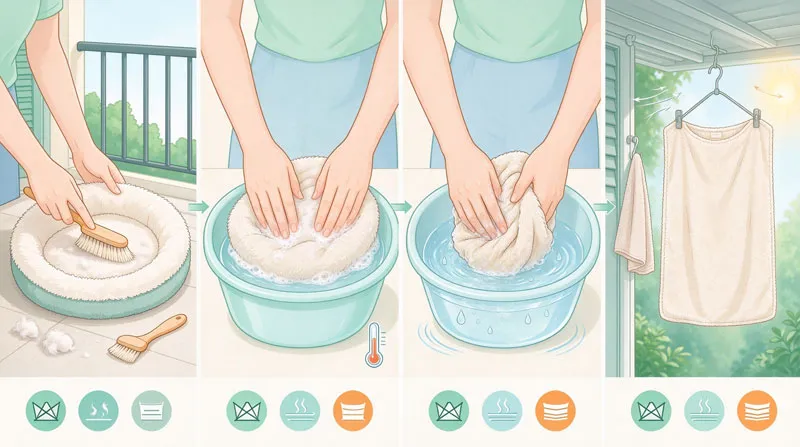
Quick decision check: Look at the care label first. If there’s foam padding, electronics, or no removable cover, hand wash. If it’s a simple cover with no hardware, the machine is fine on cold and gentle.
Choosing a Pet-Safe Detergent
Ingredients to Actually Avoid
Skip anything listing fragrance, dyes, optical brighteners, or sodium lauryl sulfate (SLS) on the label. These are common residue-leaving ingredients tied to skin irritation in pets.
The “Pet-Safe” Label Isn’t Regulated
Here’s something worth knowing: there’s no legal standard that defines what a brand can call “pet-safe.” Read the ingredient list yourself rather than trusting the front-of-bottle claim.
A Simple DIY Alternative
Half a cup of baking soda added directly to the wash cycle helps neutralize odor without added chemicals. A cup of white vinegar in the rinse cycle cuts through residue and disinfects lightly at the same time.
How to Disinfect a Cat Bed Naturally
Sunlight Works Better Than You’d Think
UV light breaks down bacterial cell walls and dries out flea eggs and larvae. Ten minutes of direct sun exposure a few times a week does real work — it’s not just an old wives’ tale.
Vinegar Soak for Hard or Plastic Bed Bases
Mix equal parts white vinegar and water, soak for 10 minutes, then rinse thoroughly. This handles bases and frames that can’t go in a machine.
When Natural Isn’t Enough
If your cat has been diagnosed with ringworm or a flea infestation, natural methods alone won’t fully disinfect the bed. At that point, ask your veterinarian for a product-specific recommendation rather than guessing.
Special Situations Most Guides Skip
Beds With No Removable Cover
Spot-clean with a soft brush, pet-safe detergent, and warm water, working in small sections so the padding doesn’t stay wet for long.
Heated or Self-Warming Beds
Always remove the heating element before washing. Wipe the housing with a damp cloth rather than submerging it.
Multi-Cat Households
Wash each cat’s bed separately, especially if one cat has a known skin or parasite issue. Shared bedding is one of the fastest ways conditions like ringworm spread between cats.
Why Your Cat Won’t Sleep on Their “Clean” Bed
This one catches a lot of owners off guard. Cats use scent to mark territory and judge safety. A bed that smells completely neutral can feel unfamiliar rather than fresh. Rub a worn blanket over the clean bed for a day, skip heavy fragrance in your detergent, and give your cat a few days to settle back in.
guide to choosing an easy-to-clean cat bed material
Keeping the Bed Cleaner Between Washes
- Vacuum weekly to catch loose fur before it builds up
- Sprinkle baking soda, let sit an hour, then vacuum it off for quick odor control
- Shake the bed outside every few days if your cat sheds heavily
allergy-friendly cat care tips for sensitive households
Frequently Asked Questions
Can I use regular Tide on my cat’s bed?
No. Standard Tide contains dyes and enzymes formulated for human fabrics that can irritate a cat’s skin. Use a fragrance-free, dye-free formula instead.
Is it safe to put a cat bed in the dryer?
Only if the care label allows it, and only on low or no heat. Skip the dryer entirely for beds with foam, electronics, or plastic components.
How do I get cat urine smell out of a cat bed for good?
Pre-treat with an enzymatic cleaner before washing. Regular detergent alone won’t break down the uric acid crystals that cause the smell to return.
Can pet dander clog my washing machine?
Yes. Dander and loose fur bind together and build up in the drain filter over time. Vacuum the bed before every wash to prevent this.
How do I disinfect a cat bed after fleas or ringworm?
Wash on the hottest safe setting for the fabric, then sun-dry if possible. For a confirmed diagnosis, ask your veterinarian whether a medical-grade disinfectant is needed.
how to check your cat for fleas at home
Disclaimer: This article is for general informational purposes only and is not a substitute for professional veterinary advice. If your cat shows signs of illness, skin irritation, or parasites, consult a licensed veterinarian.

