Does kitty litter expire? Short answer: most litters don’t carry a printed expiration date — but they absolutely lose effectiveness over time. Whether you’ve found a forgotten bag in the closet or you’re bulk-buying to save money, using degraded litter can backfire on both your cat’s health and your nose. This guide breaks down shelf life by litter type, how to spot bad litter, proper storage, and what happens when you push it too far.
Does Kitty Litter Actually Expire?
Not exactly — but that’s a misleading comfort.
Most cat litter brands skip the expiration date entirely. That doesn’t mean the product lasts forever. What you’re really dealing with is performance decay: the litter gradually loses its ability to absorb moisture, control odor, and form solid clumps.
Think of it like sunscreen without an expiry stamp. Technically usable, but you wouldn’t trust last decade’s bottle on a beach day.
The rate of decay depends on three things: litter type, whether the bag is opened, and how it’s stored. Get those wrong, and a “fresh” bag can go bad within weeks.
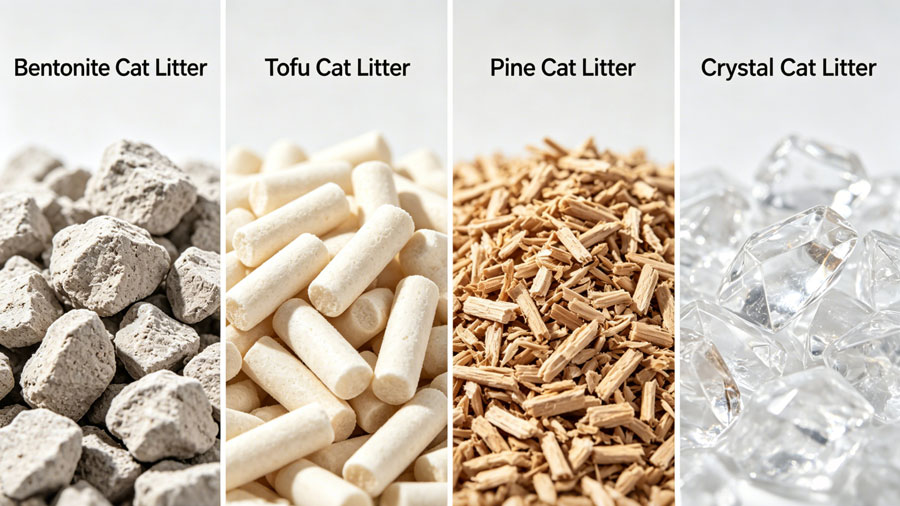
Cat Litter Shelf Life by Type
Different litter materials age very differently. Here’s what you’re actually working with:
| Litter Type | Unopened Shelf Life | After Opening | Main Failure Mode |
|---|---|---|---|
| Clumping Clay (Bentonite) | 2–5 years | 6–12 months | Absorbs ambient humidity, loses clumping power |
| Non-Clumping Clay | 2–5 years | 6–12 months | Odor control fades first |
| Silica Gel Crystal | 1–2 years | 1–3 months | Crystals saturate and stop absorbing |
| Tofu / Soy Litter | 6–12 months | 1–2 months | Mold growth, pest attraction |
| Wood / Pine Pellets | 1–2 years | 2–3 months | Absorbs moisture and crumbles |
| Corn / Wheat Litter | 6–12 months | 1–2 months | High mold and insect risk |
| Recycled Paper Pellets | 1–2 years | 2–3 months | Structure breaks down, odor control drops |
[Note] These ranges reflect manufacturer guidance from major brands and align with storage recommendations from the American Animal Hospital Association (AAHA). Always check your specific product’s packaging for brand-specific guidance.
Why Biodegradable Litters Go Bad Faster
Tofu, corn, and wheat litters are made from organic material. That’s great for the environment — less great for long-term storage. Organic compounds attract insects and support mold growth, especially in warm or humid environments.
If you’ve ever opened a bag of corn litter and noticed a faint sour smell, that’s early-stage fermentation. Not ideal for a litter box.
Why Clay and Silica Last Longer
Clay and silica are inert minerals. They don’t rot, ferment, or attract pests. Their failure mode is physical: they absorb ambient moisture from the air over time, which pre-saturates them before your cat ever uses the box.
best clumping clay cat litters for odor control
How Long Does Unopened Cat Litter Last?
An unopened bag is your best-case scenario — but it’s not a free pass.
Clay and silica litters can reasonably last 2–5 years sealed. Biodegradable options start degrading in as little as 6 months, even in the bag, because the organic material continues breaking down slowly.
The catch: most bags aren’t airtight. Microperforations in standard poly bags let small amounts of moisture through over time.
How to Read the Manufacturing Date
Most litter bags don’t print a “best by” date, but many include a lot number or batch code — usually stamped near the bottom seam. You can often decode the production month and year from this code on the brand’s website or by contacting customer service.
When buying in-store, check for bags at the back of the shelf. Those are usually newer stock.
7 Signs Your Kitty Litter Has Gone Bad
Your cat will often notice before you do. But here’s what to check yourself.
Physical Signs
- Unusual clumping — clumps fall apart, don’t form at all, or the litter feels wet and sticky right out of the bag
- Color changes — dark spots or black patches on natural litters usually signal mold
- Visible insects or webbing — a clear sign of contamination in organic litters
- Dust excess — older clay litter breaks down into fine powder, increasing respiratory irritation risk
Smell-Based Red Flags
- A sour, musty, or chemical smell before your cat uses it
- Odor control failing within hours of a full box change (fresh litter shouldn’t need help for at least 24–48 hours)
Your Cat’s Behavior
Cats are extraordinarily sensitive to smell and texture. If your cat suddenly starts:
- Refusing to enter the litter box
- Eliminating just outside the box
- Scratching the floor around the box instead of inside it
…the litter itself may be the problem. Rule out litter quality before assuming a health or behavioral issue.
[Note] According to board-certified veterinary behaviorists, cats that avoid litter boxes often do so due to sensory aversion — including unfamiliar textures or odors — rather than behavioral defiance. A litter change is always worth ruling out first.
Is Expired Cat Litter Safe? Health Risks Worth Knowing
This is the section most cat litter articles skip. Don’t ignore it.
Risks for Your Cat
Mold exposure is the biggest concern with degraded organic litters. Aspergillus and other common mold species can cause respiratory symptoms in cats, especially in enclosed spaces. Symptoms include sneezing, eye discharge, and labored breathing.
Bacterial growth in saturated or damp litter can cause paw pad irritation and increase infection risk — particularly in cats that already have skin sensitivities.
Odor control failure creates a secondary risk: cats who avoid a smelly box are more likely to hold urine, which is a known contributor to urinary tract infections (UTIs) and, in chronic cases, feline megacolon.
Risks for Humans
- Pregnant women should be especially cautious with degraded organic litters. Compromised litter creates conditions for Toxoplasma gondii to survive longer outside cat feces. [Toxoplasma gondii prevention during pregnancy]
- Asthma and allergy sufferers face increased risk from mold spores and elevated dust particulates in old, crumbling clay litter
- Children who come into contact with contaminated litter face basic hygiene risks — old litter should be discarded promptly, not left accessible
How to Store Cat Litter the Right Way
Good storage is the single biggest factor in litter longevity. The rule is simple: cool, dry, sealed.
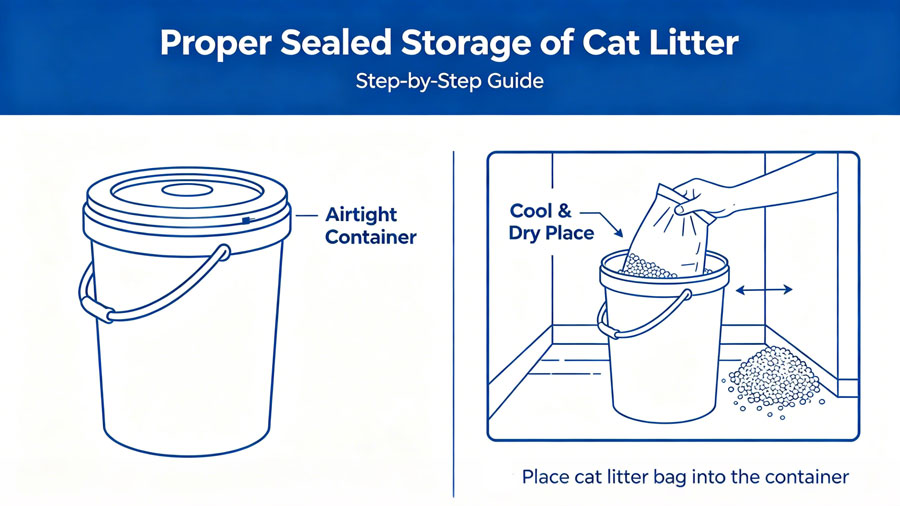
The Right Environment
- Temperature: Below 75°F (24°C). Avoid garages in summer — heat accelerates degradation in both organic and synthetic litters.
- Humidity: Below 50% relative humidity. Basements are usually the worst choice despite feeling “cool” — they’re often damp.
- Light: Keep away from direct sunlight. UV exposure degrades packaging and can affect silica gel performance.
Best Containers for Opened Bags
Original packaging is fine short-term, but a food-grade, BPA-free airtight container is better for long-term storage. Roll the bag tightly, clip it, and place it inside the container as a double layer of protection.
Avoid metal containers — they can rust in humid environments and transfer odors.
Opened vs. Unopened: A Practical Timeline
| Status | Clay/Silica | Biodegradable |
|---|---|---|
| Unopened, stored correctly | Up to 2–5 years | Up to 6–12 months |
| Opened, resealed properly | 6–12 months | 1–2 months |
| Opened, left loose | 2–4 weeks | 1–2 weeks |
How to Dispose of Old or Expired Cat Litter
By Litter Type
- Clay litter (clumping or non-clumping): Seal in a plastic bag and put in household trash. Do not flush — bentonite clay expands with water and will block pipes. Do not compost.
- Biodegradable litters (tofu, corn, wood): Check your local composting guidelines. Some municipalities accept these in green waste, but only without cat waste mixed in. Cat feces should always go in the trash.
- Silica gel litter: Trash only. Not compostable, not flushable.
For local waste disposal rules on pet waste, check your municipal waste management agency’s guidelines — many now have specific pet waste sections. [proper pet waste disposal guidelines]
Why Flushing Is Never Okay
Cat feces can contain Toxoplasma gondii oocysts. Standard wastewater treatment does not reliably eliminate them. Once in waterways, they’re lethal to marine wildlife — sea otters are particularly vulnerable. This applies to all litter types, including those marketed as “flushable.”
Practical Tips to Avoid Wasting Litter (and Money)
- Match bag size to your household. A single indoor cat typically uses 7–10 lbs of clumping clay per month. Buying a 40 lb bag when you’ll need 6 months to finish it is false economy for biodegradable types.
- Rotate your stock. If you bulk buy, use older bags first. Stack new bags behind existing ones.
- Don’t mix old and new litter. It won’t revive the old batch — it’ll just dilute the new one.
- Label opened bags with the date you first opened them. Takes five seconds and removes all guesswork.
FAQ
Does kitty litter expire if unopened?
Unopened clay and silica litters can remain effective for 2–5 years when stored correctly. Biodegradable litters (tofu, corn, wheat) degrade faster — often within 6–12 months even sealed — because organic material breaks down over time regardless of packaging.
Can old cat litter make my cat sick?
Yes, in some cases. Degraded organic litters can harbor mold spores that irritate a cat’s respiratory system. More commonly, odor control failure causes cats to avoid the box, which can lead to urinary retention and UTIs over time.
Does scented cat litter expire faster than unscented?
The fragrance additives in scented litters do fade faster than the base litter. Once the scent wears off, perceived odor control drops — even if the litter’s absorption capability is still partially intact. For cats sensitive to strong smells, faded scent can also cause litter box avoidance.
Can I store cat litter in the garage?
It’s not ideal. Garages experience significant temperature swings and humidity spikes, especially in summer and during rain. These conditions accelerate degradation in all litter types and create mold conditions in organic litters. A climate-controlled indoor closet or pantry is always preferable.
How do I know if my cat litter has mold?
Look for dark spots, black patches, or visible fuzzy growth, especially in wood, corn, or tofu litters. A musty or sour smell out of a fresh bag is another strong indicator. When in doubt, don’t use it — mold spores are not something you want circulating in an enclosed space where your cat (and you) breathe.
A Final Word
Kitty litter doesn’t come with a dramatic expiry date — but it does have a performance window. The type you buy, how you store it, and how quickly you use it all determine whether you’re getting a clean, safe litter box or a source of odor, health risk, and frustrated cats.
The simplest habit that makes the biggest difference: label opened bags with today’s date and store them sealed in a cool, dry spot. That one step eliminates most of the guesswork.
Disclaimer: The information in this article is intended for general educational purposes only and does not constitute veterinary or medical advice. If your cat is displaying signs of illness or unusual litter box behavior, consult a licensed veterinarian. Storage timelines and shelf life data are approximate and may vary by brand and formulation — always refer to your product’s packaging and manufacturer guidelines.

