Wondering what to use to clean your cat’s ears without causing pain or making things worse? You’re not alone. Most owners grab whatever’s in the bathroom cabinet — and that’s often the wrong move. This guide breaks down exactly which solutions are safe, which ingredients to avoid, and how to tell routine wax from a real problem.
Do Cats Actually Need Their Ears Cleaned?
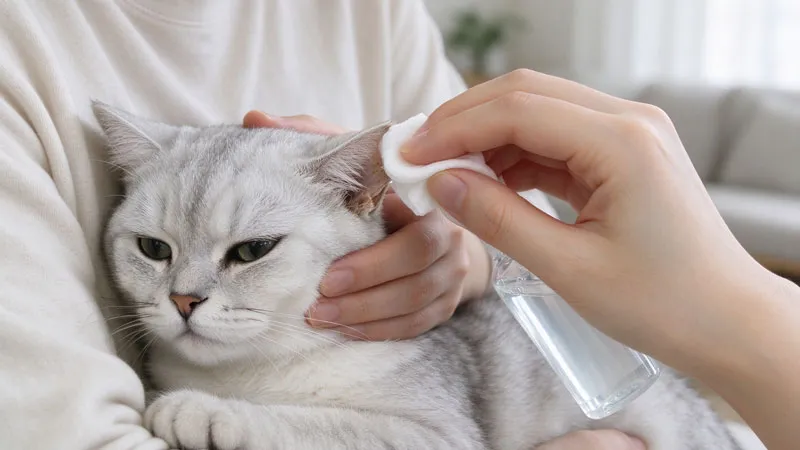
Not always. Most healthy cats groom themselves well enough that their ears never need help. Cleaning becomes necessary only when wax builds up, an odor develops, or your vet recommends it as part of managing a chronic condition.
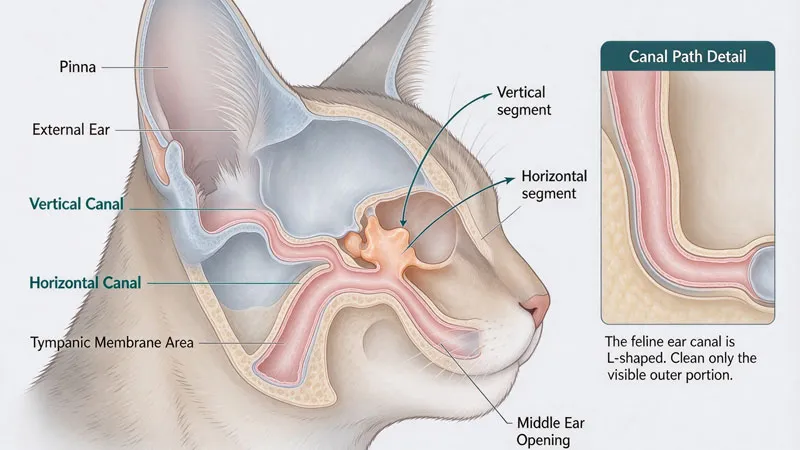
Why a Cat’s Ear Canal Traps Debris
A cat’s ear canal isn’t straight. It runs vertically, then bends into a horizontal section before reaching the eardrum. That bend is efficient for hearing, but terrible for self-cleaning. Debris that slides past the outer ear often gets stuck at the bend and sits there.
Breeds and Cats That Need More Frequent Cleaning
Some cats need checks more often than others:
- Sphynx, Devon Rex, Cornish Rex — hairless breeds produce more cerumen (ear wax) because there’s no fur to absorb natural oils.
- Scottish Folds — their folded ear structure can restrict airflow.
- Senior cats — slower immune response makes infections more likely.
- Cats with allergies — allergic skin conditions frequently show up in the ears first.
If your cat falls into one of these groups, weekly checks are worth the habit.
What to Use to Clean Cats’ Ears — Vet-Approved Options
This is the part most articles skip: not all “cat ear cleaner” bottles are built the same. Reading the label matters as much as picking a brand.
Commercial Veterinary Ear Cleaners
Veterinary-formulated cleaners fall into a few categories, and matching the right one to your cat’s issue makes a real difference.
| Ingredient Type | What It Does | Best For | Avoid If |
|---|---|---|---|
| Ketoconazole / Miconazole | Antifungal action | Recurring yeast buildup | No fungal history |
| Chlorhexidine | Antibacterial | Bacterial odor, mild infection risk | Broken skin or open sores |
| Squalene / EDTA | Softens and lifts wax | Routine wax removal | Already very dry ears |
| Salicylic acid | Breaks down debris | Heavy, sticky buildup | Sensitive or inflamed skin |
| Aloe-based mild formulas | Gentle, low-irritation cleaning | First-time cleaners, kittens | Deep infections |
Cat ear infection treatment guide
How to Choose Based on pH and Formulation
Cat ear skin sits at a different pH than human skin. A cleaner labeled alcohol-free and pH-balanced protects that lining instead of stripping it. Skip anything that lists alcohol, fragrance, or dye near the top of the ingredient list — those additives cause more irritation than benefit.
Olive Oil and Other Home Remedies — What’s Actually Safe
Plain olive oil, warmed slightly and applied a drop or two at a time, softens mild wax without stinging. It works. But it has limits. Olive oil does nothing against a bacterial or yeast infection, and it won’t touch ear mites. Treat it as a light-maintenance option, not a treatment.
Coconut oil and mineral oil work similarly, though they’re slightly less studied for this specific use. If your cat’s ears show any discharge, odor, or redness, skip the oil and call your vet first.
What NOT to Use to Clean Your Cat’s Ears
Plenty of “natural” advice online is outdated or outright risky. Here’s what to leave in the cabinet.
Hydrogen Peroxide
Dries out the ear canal and stings any hidden scratches or ulcers. It also breaks down the protective wax layer that keeps debris and infection out.
Rubbing Alcohol
Same problem as peroxide, amplified. Alcohol on inflamed skin causes real pain, and cats remember that association at the next cleaning attempt.
Apple Cider Vinegar
Too acidic for already-irritated skin. Even diluted, it stings small cuts and can worsen inflammation.
Witch Hazel
A solid astringent for human skin, but too harsh and drying for a cat’s ear lining.
Fragranced Baby Wipes
Fragrance chemicals irritate the ear’s mucous membrane, and cats groom off whatever residue is left — meaning they ingest it too.
Cotton Swabs (Q-Tips®)
Never use these inside the canal. They push debris deeper instead of removing it, and they carry a real risk of puncturing the eardrum if your cat moves suddenly. If the eardrum’s integrity is unknown — which it usually is, at home — introducing any liquid past a compromised drum risks affecting the middle ear. Stick to cotton balls or gauze, used only where your finger can reach.
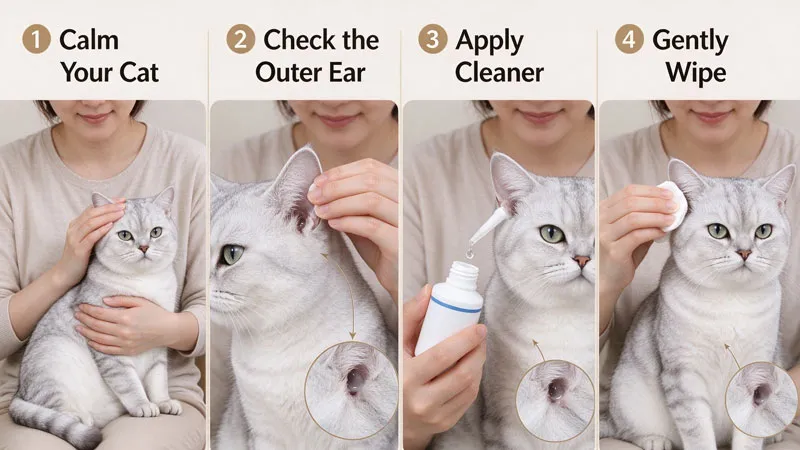
How to Clean Your Cat’s Ears Safely: Step-by-Step
- Pick a calm moment — not right after play or a stressful event.
- Wrap your cat gently in a towel if she won’t hold still.
- Warm the solution slightly by standing the bottle in warm water.
- Fill the ear canal without letting the bottle tip touch the ear.
- Massage the base of the ear for 20–30 seconds. Listen for a soft squelch.
- Let your cat shake her head — this pulls debris toward the outer ear.
- Wipe visible debris with a cotton ball, never past the first knuckle of your finger.
- Reward with a treat, then repeat on the other ear.
How Often Should You Clean Your Cat’s Ears?
Over-cleaning irritates healthy ears just as much as neglect harms dirty ones. Frequency should match your cat’s actual risk level.
| Cat Type | Check Frequency | Cleaning Frequency |
|---|---|---|
| Indoor cat, low wax | Monthly | Only if visibly needed |
| Outdoor / high-exposure cat | Weekly | Every 2–4 weeks |
| Hairless breed | Weekly | Weekly to biweekly |
| Senior cat | Weekly | As needed, watch closely |
| History of chronic otitis | As directed by vet | Per vet protocol |
Grooming routine for senior cats
Normal Ear Wax vs. Signs of Infection or Mites
What Healthy Wax Looks Like
Light tan or slightly yellow, minimal amount, no smell. That’s normal and doesn’t need daily attention.
Red Flags: When Debris Signals a Problem
- Dark, coffee-ground-like debris → often points to ear mites (Otodectes cynotis), a common parasite especially in kittens and cats with outdoor access.
- Yellow or green discharge with odor → suggests a bacterial or yeast infection.
- Swelling, heat, or visible pain on touch → needs a vet exam before any cleaning attempt.
Feline otitis externa clinical overview
My Cat Keeps Shaking Its Head After Cleaning — Is That Normal?
A single shake right after cleaning is normal; it’s how cats clear leftover solution. Repeated shaking, scratching, or tilting the head hours later is not normal and points to residual discomfort or an underlying issue worth a vet check.
When to Stop DIY Cleaning and See a Veterinarian
Stop and call your vet if you notice:
- Visible pain when the ear is touched
- Blood or a torn-looking eardrum
- Swelling that wasn’t there before
- A smell that returns within days of cleaning
- Infections that keep coming back
Why Ear Problems Can Signal Bigger Health Issues
Chronic ear inflammation isn’t always isolated. It can point to allergies, autoimmune conditions, or metabolic issues like diabetes. Recurring otitis in an older cat is a common enough pattern that vets often run bloodwork alongside treating the ear itself.
Feline chronic ear disease and systemic health research
Frequently Asked Questions
How much does a professional vet ear cleaning cost?
Typically $50–$150 depending on whether sedation or medication is involved, plus the exam fee.
Can I use human ear drops on my cat?
No. Human formulations often contain ingredients too harsh or the wrong pH for a cat’s ear lining.
Is it normal for cat ear cleaner to smell strong?
Mild medicinal smell is normal. A sharp chemical or ammonia-like smell is not — check the label or switch products.
Can kittens have their ears cleaned the same way as adult cats?
Yes, but use a gentler, aloe-based formula and shorter sessions. Kitten ear skin is more sensitive.
Should I clean my cat’s ears before or after applying prescribed medication?
Always clean first, then wait as long as your vet recommends before applying medication — some cleaners weaken the drug’s effect if applied too close together.
Key Takeaways
- Most cats don’t need routine ear cleaning — check weekly, clean only when needed.
- Vet-formulated, pH-balanced cleaners beat home remedies for anything beyond light wax.
- Olive oil works for mild buildup only, not infections or mites.
- Never use peroxide, alcohol, vinegar, witch hazel, or cotton swabs.
- Persistent odor, pain, or discharge means it’s time to call your vet, not clean harder.
Disclaimer: This article is for informational purposes only and does not replace professional veterinary advice. Always consult a licensed veterinarian before starting any new ear-care routine for your cat, especially if you notice pain, discharge, or unusual behavior.

