You scoop every morning, top off when it looks low, and still your cat tracks litter across the kitchen or skips the box entirely. How much litter to put in a litter box isn’t a guess — it’s math, and most owners get it wrong in one direction or the other. Here’s the exact depth for every box, litter type, and cat.
How Much Litter to Put in a Litter Box: The 2–3 Inch Rule
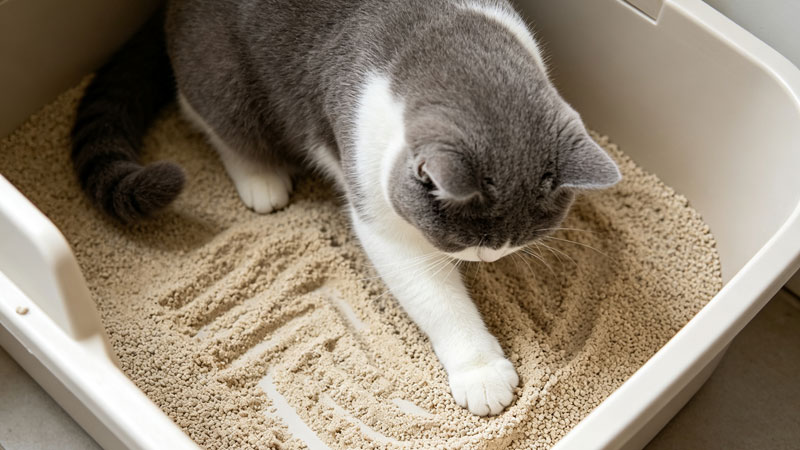
Most cats need 2 to 3 inches of litter, measured flat across the bottom of the box. Not piled. Not eyeballed from the side. Flat.
That depth does three jobs at once:
- Gives your cat enough material to dig and bury waste
- Lets clumping litter form a solid, scoopable ball instead of a smear
- Keeps urine from pooling on the plastic floor, which is where odor actually starts
Cornell Feline Health Center environmental enrichment guidelines
The Depth-to-Volume Table Nobody Publishes
Depth alone doesn’t tell you how much litter to buy. Box size changes the math completely.
| Box Size (approx.) | Target Depth | Litter Needed |
|---|---|---|
| Standard (19″ x 15″) | 3 inches | ~10-12 lbs |
| Large (24″ x 17″) | 3 inches | ~14-16 lbs |
| Jumbo (28″ x 20″) | 3 inches | ~18-20 lbs |
| High-sided / corner box | 3 inches | ~16-18 lbs |
Buy by weight, not by “looks full.” A jumbo box that looks full at 1.5 inches is actually underfilled.
best litter box for large cats
Litter Type Changes the Right Depth
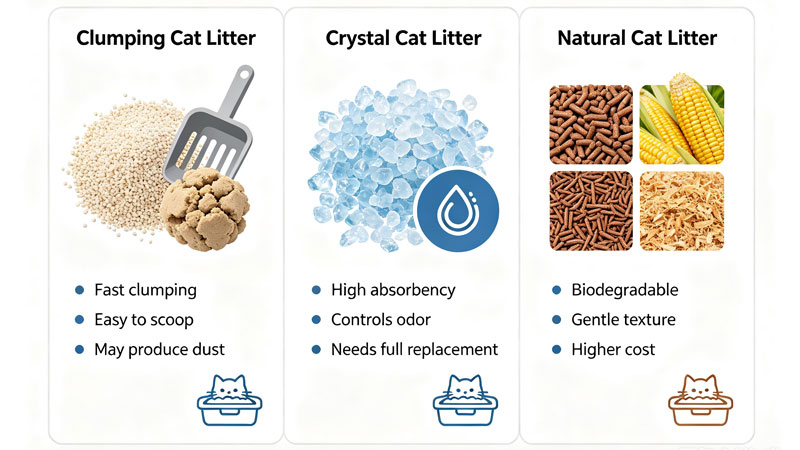
Not every litter behaves the same at the same depth. Treating clay, crystal, and natural litter identically is where most owners waste money or waste time cleaning.
Clumping Clay Litter
Use the full 3 to 4 inches here. Clay needs room to absorb before it clumps. Skimp and you get a paste stuck to the tray floor instead of a clump you can lift out.
Crystal or Silica Litter
Stick to 2 inches. Crystal litter doesn’t clump — it absorbs and dries. More depth just means more dust and more product wasted underneath the top layer that’s actually doing the work.
A quick safety note here: silica dust has been flagged by some veterinarians as a respiratory irritant for cats with asthma or sensitive airways. If your cat sneezes near the box or you notice fine dust settling nearby, switch to a low-dust or pelleted formula.
ASPCA guidance on litter safety and respiratory sensitivity
Natural Litter (Pine, Corn, Wheat)
These absorb liquid rather than clump it in most formulas. 2 to 3 inches is standard, but check the bag — pellet-style natural litters often recommend less because they expand as they absorb.
Adjusting Depth by Life Stage
A 4-month-old kitten and a 12-year-old cat with arthritis do not need the same litter box.
- Kittens under 6 months: 1.5 to 2 inches. Deep litter is disorienting for small paws still learning to dig.
- Adult cats: 2 to 3 inches, adjusted up slightly if your cat digs aggressively before and after using the box.
- Senior cats or cats with joint pain: Keep it shallow, around 2 inches, and pair it with a low-entry box. Deep, shifting litter is genuinely uncomfortable for a cat with arthritis — the same way loose sand is harder to walk on than firm ground.
Self-Cleaning Litter Boxes: Less Is Actually More
Automatic boxes like Litter-Robot or PetSnowy run on sensors and rotating mechanisms. Overfilling isn’t just messy here — it can jam the unit.
Most manufacturers recommend around 2 inches, well below the standard manual-box range. Follow the fill line printed inside the globe or tray, not the depth guidance you’d use for a regular box. When in doubt, check your model’s manual before adding a “safety margin” of extra litter — that’s the most common cause of self-cleaning box malfunctions reported to manufacturer support lines.
Multi-Cat Households: The Formula Most Guides Skip
One box, three cats, and a depth calculation designed for a single cat — that combination fails fast.
The N+1 rule still applies: one litter box per cat, plus one extra. Two cats means three boxes.
Depth doesn’t change per box, but consumption does. A two-cat household typically goes through 30 to 40 lbs of clumping litter per month across all boxes combined, versus 15 to 20 lbs for a single cat. Budget litter purchases accordingly instead of running out mid-month.
how many litter boxes do you need for multiple cats
Climate Changes the Math Too
Humidity affects clumping litter more than most owners expect. In humid regions, clay litter absorbs ambient moisture and clumps faster — sometimes before your cat even uses the box. If you live somewhere humid, top off more frequently and consider a slightly shallower fill to avoid premature clumping at the bottom.
Dry winter climates bring the opposite problem: static buildup increases tracking and dust. A litter mat by the box door catches most of it before it reaches your floor.
Too Much vs. Too Little: How to Diagnose It
Don’t just watch for symptoms. Use this quick check when your cat’s behavior changes:
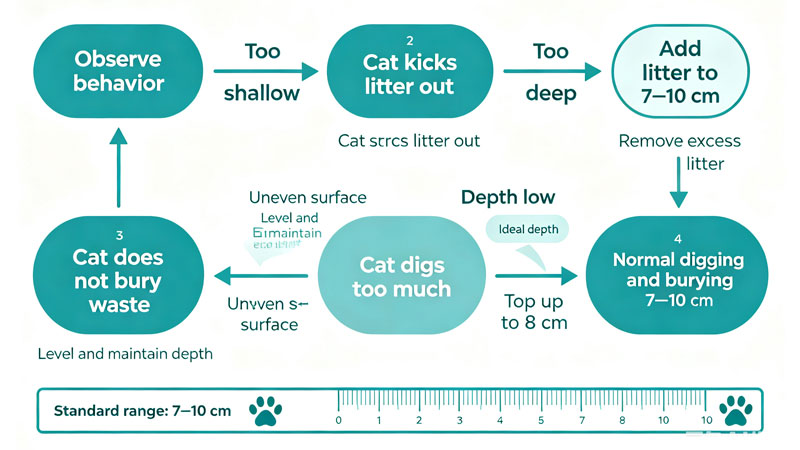
Cat is flinging litter or perching on the edge? You’re likely over 4 inches. Cut back by half an inch and observe for two days.
Cat is avoiding the box or leaving wet paw prints nearby? You’re likely under 2 inches. Add litter gradually rather than all at once — a sudden change can itself cause avoidance.
Depth looks correct but the behavior continues? The issue usually isn’t depth. Check litter type, box cleanliness, or whether the box is simply too small for your cat’s size.
Maintenance: Keeping the Depth Consistent
Depth doesn’t stay put on its own. Scooping removes litter every time, and that adds up.
- Daily: Scoop clumps and solid waste at least once.
- Every 2-3 days: Top off with a cup of fresh litter to restore target depth.
- Every 2-3 weeks (clumping litter) or weekly (non-clumping): Fully empty, wash the tray, and refill from scratch.
Skipping the full replacement and only topping off long-term is how odor builds up even in a box that’s scooped daily.
Frequently Asked Questions
How do I measure litter depth without a ruler?
Use two fingers held flat against the side of the box — most adult fingers stacked flat measure close to 2 inches, giving you a fast visual reference.
Is more litter always better for odor control?
No. Odor control comes from scooping frequency and full replacement schedule, not extra depth. Litter beyond 4 inches often makes odor worse by trapping waste out of reach of the scoop.
How much litter should I buy per month for one cat versus two?
Budget 15-20 lbs monthly for one cat using clumping litter, and 30-40 lbs for two cats sharing three boxes.
Can incorrect litter depth affect kitten litter training?
Yes. Litter that’s too deep can disorient a kitten mid-training, leading to accidents outside the box. Start shallow and increase depth gradually as your kitten grows.
Why does my cat scratch the wall or floor instead of the litter?
his usually signals the litter feels wrong underfoot — too shallow, too deep, or the wrong texture — rather than a training issue.
Disclaimer: This article is for general informational purposes only and is not a substitute for professional veterinary advice. Always consult your veterinarian regarding your cat’s specific health, behavior, or litter box needs.

